How to Potty Train: Complete Step-by-Step Guide 2026
Evidence-based potty training guide covering readiness signs, choosing a method, step-by-step process, handling setbacks, and nighttime training.
Most Important Truth
Readiness matters more than age. A ready 2.5-year-old will train in days. A not-ready 3-year-old will struggle for months. Wait for readiness signs, forcing it backfires.
Potty Training in 5 Steps
To potty train, wait for readiness signs (usually between 24 and 36 months), set up a floor potty and training pants, pick a method, take your child to the potty on a steady schedule, and respond to accidents calmly. Daytime training takes days to a few weeks for a ready child, and nighttime dryness usually comes months to years later. Updated 2026.
| Step | What to do | How long |
|---|---|---|
| 1. Check readiness | Look for dry stretches, interest in the toilet, and the ability to follow simple directions | Girls average 29 months, boys 31 months |
| 2. Prepare | Floor potty, cotton training pants, a plan both parents follow | 1-2 weeks before starting |
| 3. Choose a method | Three-day intensive, scheduled, or gradual child-led | 3 days intensive; 2-6 weeks gradual |
| 4. Follow a potty schedule | Potty every 15-20 minutes on day 1, then stretch the gaps as accidents drop | Days 1-3, then ongoing |
| 5. Handle accidents | Stay calm, clean up together, go back to the potty; expect setbacks | Poop training can take 2-8 weeks longer |
What You Need Before Day One
Best Floor Potty
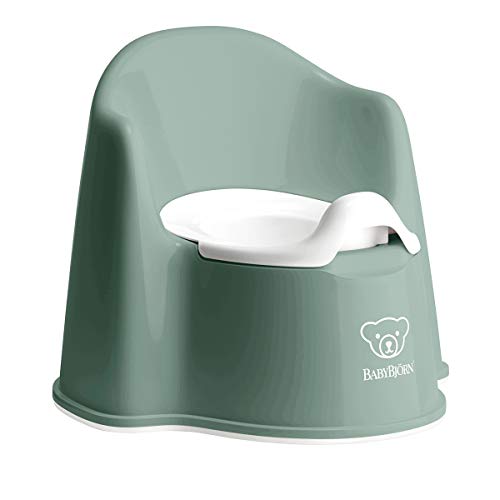
BabyBjörn Potty Chair
Under $50
Backrest, armrests, a high splash guard, and a removable inner potty that empties and rinses in seconds.
View on AmazonBest 3-in-1

Ingenuity Prepare to Potty 3-in-1 System
Under $25
Starts as a floor potty, the seat moves to the adult toilet as a topper, then the base becomes a step stool.
View on AmazonTraining Pants

MooMoo Baby Cotton Training Pants (8-Pack)
Under $50
Cotton underwear with an absorbent middle, so your child feels the accident but the floor mostly does not.
View on AmazonThe Method Book

Oh Crap! Potty Training (Jamie Glowacki)
Under $25
The block-by-block method many parents follow, written for doing it once and doing it right.
View on AmazonPrices are Amazon prices when we last checked and change often. Picks are researched from published specs and owner reviews, not hands-on testing, and are not professional advice. As an Amazon Associate we earn from qualifying purchases.
Check for Readiness (Don't Start Too Early)
Physical Readiness Signs (Must Have Most)
Emotional/Mental Readiness Signs
When NOT to Start
Average Potty Training Ages
Choose Your Method
Method 1: Three-Day Method (Intensive)
Best for: Children showing ALL readiness signs, parents who can dedicate 3 full days
How It Works:
Pros
- • Fast results if ready (90% trained in 3-5 days)
- • Clear timeline and structure
- • Intensive focus builds momentum
Cons
- • Requires 3 full days at home
- • High accident frequency first few days
- • Doesn't work if child isn't fully ready
Method 2: Oh Crap! Potty Training
Best for: Children 20-30 months, parents wanting structured progressive approach
Blocks/Phases:
Pros
- • Clear phases with measurable progress
- • Works for younger toddlers (20-30 months)
- • Comprehensive book with troubleshooting
Cons
- • Still requires several days at home
- • Complex method (need to read full book)
Method 3: Gradual/Child-Led (Least Intensive)
Best for: Parents with limited time, children who resist pressure
How It Works:
Pros
- • Low pressure for child and parent
- • Fits into busy schedule
- • Less power struggle
Cons
- • Takes much longer (weeks or months)
- • Child may resist transition from diapers
- • Inconsistent progress
Recommended Potty Training Products
Having the right tools can make potty training smoother for both you and your toddler:

All-in-One Potty Training Solution
2-in-1 Potty Training Toilet
Toddler potty that doubles as a training seat for the big toilet, with an anti-slip base.
View on AmazonAs an Amazon Associate, we earn from qualifying purchases at no cost to you.
Absorbent Training Underwear
MooMoo Baby Training Pants (8-Pack)
Cotton training pants that feel like underwear but provide protection during the learning process.
View on AmazonAs an Amazon Associate, we earn from qualifying purchases at no cost to you.
As an Amazon Associate, we earn from qualifying purchases at no cost to you.
Prepare (1-2 Weeks Before Starting)
Supplies to Buy
Preparation Steps
Execute Three-Day Method (Detailed)
Day 1: Naked Day
Stay home, naked from waist down
Morning Schedule
7:00 - Remove diaper, explain "No more diapers!"
7:15 - Sit on potty (may not go)
7:30 - Breakfast with LOTS of fluids
8:00+ - Potty every 15-20 minutes
What to Watch For
• Squirming, holding crotch
• Sudden stillness
• Accident? Stay calm, rush to potty
• Success? BIG praise, sticker!
Evening
• Potty before bed
• Diaper for overnight
• Praise progress!
• 1-5 accidents is normal
2Day 2: Add Clothes
3Day 3: Underwear + Outing
Handle Accidents Correctly
DO This When Accident Happens
DON'T Do This
Tackle Poop Training
Why Poop Is Harder
Poop Training Strategies
Nighttime Training (Separate from Daytime)
When to Start Nighttime
Nighttime Steps
Note: Nighttime accidents are normal until age 7. Use pull-ups at night if needed, it's not a failure! Rule out medical issues if persists past 7 years.
Troubleshoot Common Problems
Problem: Child Refuses to Sit on Potty
Problem: Regression After Success
Causes:
- • New sibling, moving, starting school
- • Illness or developmental leap
- • Testing boundaries
Solutions:
- • Stay calm, don't punish
- • Return to frequent potty breaks
- • Usually resolves in 1-2 weeks
Problem: Scared of Toilet
Realistic Timeline Expectations
Poop training may take 2-8 weeks longer. Nighttime dryness: 6-24 months after daytime.
When to Give Up and Try Later
Signs Child Isn't Ready:
What to Do:
It Will Happen!
The parent who waits until child is ready and stays calm through accidents will succeed faster than the parent who starts early and stresses. You've got this!
Potty Training FAQ
How do I potty train a 3 year old?
Treat a 3-year-old like any other ready child: check the readiness signs, prepare the potty and training pants, and pick a method. Three-year-olds often do well with the three-day method because they can follow directions and talk about what they feel. If your child resists, pause for a few weeks and try again, since pushing a not-ready child backfires.
How long does potty training take?
A ready child often learns daytime use in 3 days to a few weeks with an intensive method, and gradual child-led methods take about 2 to 6 weeks. Pooping on the potty can take 2 to 8 weeks longer, and nighttime dryness usually arrives 6 to 24 months after daytime training.
What is a good potty training schedule?
On day 1 of the three-day method, take your child to the potty every 15 to 20 minutes while they are awake and offer plenty of fluids. As accidents drop, stretch the gaps gradually, and always go before outings, naps, and bed.
What are the main potty training methods?
The main potty training methods are the three-day intensive method, a scheduled method where you take your child at set times, and a gradual child-led approach. The three-day method is fastest, the scheduled method suits busy families, and the child-led approach is the lowest pressure.
When should I start potty training?
Start when your child shows readiness signs, not at a set age. Most children are ready between 24 and 36 months, with girls averaging 29 months and boys 31 months. Avoid starting during big changes such as a move or a new baby.