How to Get Baby to Sleep: Complete Step-by-Step Guide 2026
Proven techniques and age-specific strategies to help your baby fall asleep faster, stay asleep longer, and develop healthy sleep habits from newborn to 12 months.
Before You Start:
Sleep struggles are normal and temporary. Every baby is different, what works for one may not work for another. This guide provides evidence-based techniques to try, not rigid rules to follow. Be patient with yourself and your baby.
Step 1: Create the Ideal Sleep Environment
The 5 Elements of Perfect Sleep Space:
1. Complete Darkness
- Why: Light suppresses melatonin (sleep hormone)
- How: Blackout curtains that block 100% of light
- Test: You shouldn't be able to see your hand in front of your face at noon
- Exception: Tiny red nightlight for nighttime diaper changes (red doesn't suppress melatonin)
2. White Noise
- Why: Masks household noises, mimics womb sounds
- How: White noise machine or fan at 50-65 decibels
- Placement: Across room from baby (not in crib)
- Run: All night and for all naps
3. Cool Temperature
- Ideal range: 68-72°F (20-22°C)
- Why: Body temperature drops during sleep; cool room facilitates this
- Check: Baby's chest should feel comfortably warm, not sweaty
4. Safe Sleep Setup
- Firm, flat surface: Crib or bassinet mattress
- Fitted sheet only: No blankets, pillows, bumpers, stuffed animals
- Back to sleep: Always place baby on back
- Sleep sack: Wearable blanket instead of loose blanket
5. Comfortable Sleepwear
- Swaddle (0-3 months): Arms snug, hips loose, until baby can roll
- Sleep sack (3+ months): Once rolling, transition to arms-out sleep sack
- TOG rating: Choose thickness based on room temperature
Step 2: Establish Age-Appropriate Schedule
Newborn (0-8 Weeks): Survival Mode
- Wake windows: 45-90 minutes max (including feeding time)
- Naps: 4-6 per day, wherever/however baby sleeps
- Bedtime: No set bedtime yet, focus on wake windows
- Night wakings: Every 2-3 hours for feeding is normal
- Goal: Prevent overtiredness, accept chaos
2-4 Months: Emerging Patterns
- Wake windows: 1-2 hours
- Naps: 4-5 per day
- Bedtime: Start moving earlier (7-8 PM)
- Night wakings: 2-4 feedings typical
- Goal: Consistent bedtime routine begins
5-7 Months: Schedule Solidifies
- Wake windows: 2-3 hours
- Naps: 3 naps transitioning to 2
- Bedtime: 7-8 PM consistently
- Night wakings: 1-2 feedings (some sleep through)
- Goal: Predictable daily rhythm
8-12 Months: Two Naps Established
- Wake windows: 3-4 hours
- Naps: 2 naps (9:30 AM and 2:30 PM typical)
- Bedtime: 7-8 PM
- Night wakings: 0-1 feeding (many sleep through)
- Goal: Consistent, independent sleep
Step 3: Create a Consistent Bedtime Routine (30-45 Minutes)
Sample Bedtime Routine (7:00-7:30 PM)
- 6:30 PM - Bath (not every night, 2-3x/week)
- 6:40 PM - Lotion/massage (calming touch)
- 6:45 PM - Pajamas and sleep sack
- 6:50 PM - Feed (bottle or nurse) in dimly lit room
- 7:10 PM - Burp, fresh diaper
- 7:15 PM - Books (1-2 short books)
- 7:20 PM - Song or lullaby
- 7:25 PM - Into crib drowsy but awake
- 7:30 PM - Lights off, white noise on, leave room
Key: Same order, same time, every night
Essential Products for Better Baby Sleep
The right sleep products can make a significant difference in helping your baby sleep safely and soundly:

Safe, Comfortable Sleep
HALO SuperSoft Bamboo Sleep Sack
Hip-healthy, buttery soft bamboo sleep sack replaces loose blankets for safe sleep. Machine washable.
View on AmazonAs an Amazon Associate, we earn from qualifying purchases at no cost to you.

Calms Startle Reflex for Newborns
SwaddleMe Original Swaddle (3-Pack)
100% cotton swaddles that improve sleep by reducing startle reflex. Easy adjustable wings.
View on AmazonAs an Amazon Associate, we earn from qualifying purchases at no cost to you.

Monitor Baby Without WiFi or Apps
HelloBaby No WiFi Baby Monitor (5" Screen)
30-hour battery, night vision, 2-way talk, and 1000ft range. No WiFi or app required - completely private.
View on AmazonAs an Amazon Associate, we earn from qualifying purchases at no cost to you.
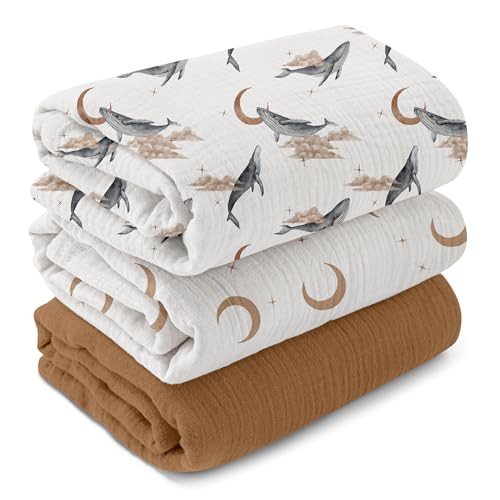
Breathable Muslin Swaddles
GLLQUEN Muslin Swaddle Blankets (3-Pack)
Soft, breathable muslin blankets perfect for swaddling, nursing cover, or stroller shade.
View on AmazonAs an Amazon Associate, we earn from qualifying purchases at no cost to you.
As an Amazon Associate, we earn from qualifying purchases. These are parent-tested products that support safe sleep practices.
Routine Principles:
- Consistency: Same steps, same order, every night
- Timing: Start routine at same time nightly (±15 min)
- Calm activities only: No roughhousing, screens, or stimulating play
- Dim lighting: Darkness signals melatonin production
- End awake: Put baby down drowsy but awake (see Step 4)
Step 4: Practice "Drowsy But Awake"
Why This Matters:
Babies who fall asleep independently at bedtime can put themselves back to sleep when they wake between sleep cycles (which happens 4-6 times per night). Babies who need rocking/feeding to sleep will cry for that same help every time they wake.
How to Do It:
- Drowsy signs: Heavy eyelids, slower movements, staring off
- Still awake signs: Eyes open, aware of surroundings
- Place in crib: Baby knows they're in crib, not asleep in your arms
- Stay calm: Quietly leave room
If Baby Cries:
This is where sleep training methods differ. Choose one that fits your parenting style (see Step 5).

Step 5: Choose a Sleep Training Method (If Needed)
Important:
Sleep training is optional and works best after 4-6 months. Consult pediatrician before starting. Not all babies need formal sleep training, some naturally learn independent sleep.
Method 1: Cry It Out (Extinction)
- How: Put baby down awake, leave room, don't return until morning (or scheduled feeding)
- Timeline: 3-7 nights typically
- Pros: Fastest method, clear boundaries
- Cons: Emotionally difficult for parents, baby cries extensively
- Best for: Parents who want quick results and can handle crying
Method 2: Ferber Method (Graduated Extinction)
- How: Check-ins at increasing intervals (3, 5, 10, 15 minutes)
- Check-in: Brief (30-60 seconds), voice only or minimal touch, then leave
- Timeline: 5-10 nights
- Pros: Reassures baby you're there, still effective
- Cons: Check-ins may make some babies cry more
- Best for: Parents who want middle-ground approach
Method 3: Chair Method
- How: Sit in chair next to crib, gradually move chair farther away each night
- Timeline: 2-3 weeks
- Pros: Very gradual, parent present throughout
- Cons: Slowest method, parent may become sleep association
- Best for: Parents who can't tolerate crying
Method 4: Pick Up/Put Down
- How: Pick up when baby cries, calm until drowsy, put down. Repeat as needed.
- Timeline: 2-4 weeks
- Pros: Very responsive, lots of comfort
- Cons: Exhausting, takes longest, inconsistent results
- Best for: Parents unwilling to let baby cry at all
Method 5: Fading (No Formal Training)
- How: Gradually reduce help (rock less, feed shorter, etc.) over weeks/months
- Timeline: Varies, 4-8 weeks+
- Pros: Very gentle, no crying
- Cons: Very slow, may not work for all babies
- Best for: Parents opposed to sleep training or younger babies (under 4 months)
Step 6: Handle Night Wakings Appropriately
When to Feed vs When to Soothe:
0-3 Months: Feed Every Waking
- Babies need 2-4 night feeds
- Feed on demand, don't sleep train yet
4-6 Months: Start Reducing Night Feeds
- Many babies can go 6-8 hours without eating
- Consult pediatrician about dropping feeds
- If baby ate well recently (within 3-4 hours), try soothing instead of feeding
6+ Months: Most Babies Can Sleep 10-12 Hours
- If pediatrician approves, can night wean
- Respond to night wakings with your chosen sleep training method
- Ensure baby is getting enough calories during day
Troubleshooting Night Wakings:
- Hunger: Increase daytime feeds/solids
- Discomfort: Check temperature, diaper, teething
- Sleep associations: Baby needs help falling back asleep (sleep training helps)
- Developmental leaps: Temporary regressions (4 months, 8 months, 12 months) resolve in 2-4 weeks
Step 7: Troubleshoot Common Problems
Problem: Baby Fights Bedtime (Takes 1+ Hours to Fall Asleep)
Causes & Solutions:
- Undertired: Last wake window too short → Extend wake window by 15-30 min
- Overtired: Bedtime too late → Move bedtime earlier by 30 min
- Too much daytime sleep: → Cap naps (don't let nap past 4:30 PM)
Problem: Early Morning Waking (Before 6 AM)
Causes & Solutions:
- Room too bright: → Better blackout curtains
- Too much daytime sleep: → Cap total daytime sleep
- Bedtime too early: → Move bedtime 15-30 min later
- Hunger: → Bigger dinner/bedtime feed
Problem: Short Naps (30-45 Minutes)
Causes & Solutions:
- Developmental: Normal until 5-7 months → Wait it out
- Wake windows off: → Adjust timing (try earlier or later)
- Environment: → Ensure room is dark, white noise on
- Can't connect cycles: → Practice crib naps, not just contact naps
Problem: Wakes Crying 30-45 Min After Bedtime
Cause: "False start" due to overtiredness
Solution: Move bedtime 15-30 minutes earlier
Problem: Multiple Night Wakings (Still Waking 4-6x at 6+ Months)
Causes & Solutions:
- Sleep associations: Baby needs rocking/feeding to fall asleep → Sleep training
- Hunger: Not eating enough during day → Increase daytime calories
- Discomfort: → Rule out reflux, allergies, teething
Step 8: Be Consistent for 2 Weeks
Why Consistency Matters:
- Babies learn through repetition and predictability
- Inconsistency confuses baby and prolongs sleep struggles
- Most methods take 3-14 nights to work
Stay Consistent With:
- Bedtime: Same time every night (±15 min)
- Routine: Same steps in same order
- Response: Same sleep training method every waking
- Environment: Same sleep space, darkness, white noise
- Schedule: Same wake windows and nap times daily
Commitment Required:
- Both parents must agree on method and stick to it
- Don't switch methods mid-week (confuses baby)
- Accept temporary increased crying as baby adjusts
- Give method 7-10 nights before judging effectiveness

Age-Specific Quick Guides
0-3 Months: Newborn Survival
- Focus: Short wake windows (45-90 min), swaddle, white noise
- Don't: Sleep train, enforce schedule, worry about "bad habits"
- Do: Safe sleep space, watch wake windows, establish bedtime routine
- Goal: Prevent overtiredness, accept frequent waking
4-6 Months: Build Foundation
- Focus: Consistent bedtime, practice drowsy-but-awake
- Consider: Gentle sleep training if baby struggles
- Don't: Rush formal sleep training before 4 months
- Goal: Independent sleep at bedtime
6-12 Months: Sleep Through Night
- Focus: Night weaning (with doctor approval), sleep training if needed
- Do: Establish 2-nap schedule, consistent bedtime 7-8 PM
- Expect: 10-12 hour stretches at night
- Goal: Full nights of sleep without parental intervention
When to Get Help
Consult pediatrician or sleep consultant if:
- Baby snores loudly or has breathing pauses during sleep
- You've tried multiple methods consistently for 3+ weeks with no improvement
- Baby is sleeping significantly less than age-appropriate ranges
- Your mental health is severely impacted by sleep deprivation
- You suspect medical issue (reflux, allergies, sleep apnea)
Final Encouragement
Sleep struggles are temporary. What feels impossible at 3 months often resolves by 6 months. What takes hours at 6 months often takes minutes by 9 months. Be patient, stay consistent, and remember: you're teaching your baby a skill (independent sleep) that will benefit them for life.
Nap Window
Know exactly when your baby should nap, in seconds.
No tracking. No logging. No accounts. Ages 0–36 months.
Download on the App StoreFrom the makers of ParentCalc
Related Articles
Baby Sleep Schedule by Age
Age-specific wake windows and nap schedules
Sleep Training Methods Compared
Detailed comparison of Ferber, CIO, and gentle methods
How to Choose a Daycare
Complete inspection guide for finding quality care
How to Prepare for Baby Financially
Budget and savings plan for baby's arrival
Related Calculators
Baby Sleep Calculator
Baby Growth Calculator
Developmental Milestones
Daycare Cost Calculator
Baby Cost Calculator
Track Your Baby's Sleep Patterns
Use our sleep calculator to identify patterns and optimize schedules
Try Our Sleep Calculator