Complete Guide to Kids Base Layers
Merino wool vs synthetic, sizing tips, care instructions, and the best base layers for every outdoor activity
2026 Product Picks
Our latest product roundups related to this guide:
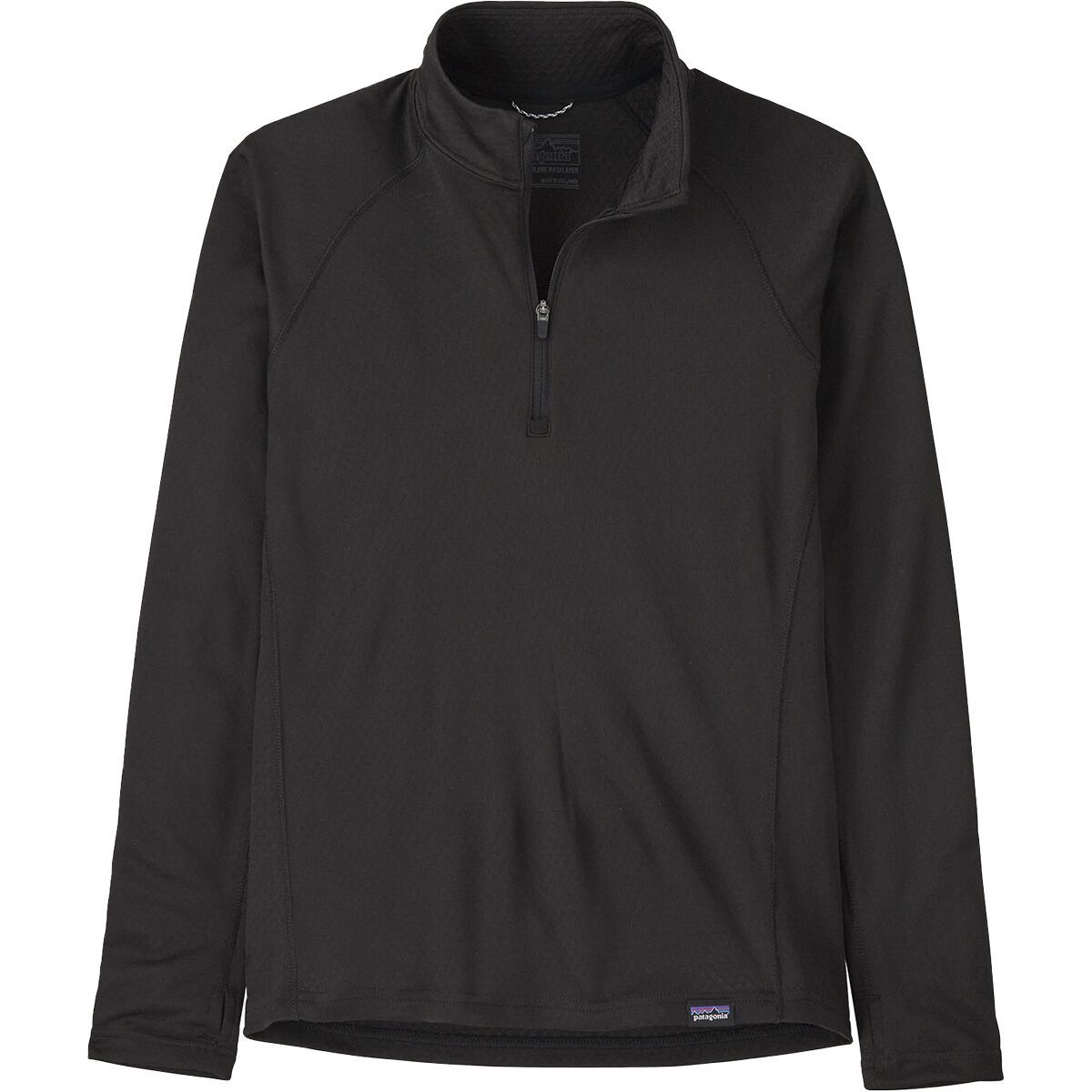
Patagonia Capilene Midweight Zip Neck Top - Kids
The gold standard in kids synthetic base layers. Quarter-zip for easy temperature regulation, HeiQ odor control, and diamond-grid interior for optimal warmth.
Base layers are the unsung heroes of outdoor comfort. While jackets and snow pants get all the attention, it's the base layer sitting against your child's skin that determines whether they stay warm, dry, and comfortable - or end up cold, clammy, and miserable.
This comprehensive guide covers everything you need to know about choosing, sizing, and caring for kids' base layers. Whether you're gearing up for ski season, hiking trips, or everyday cold weather, you'll learn exactly which base layers work best for your child's activities.
What Are Base Layers and Why Do Kids Need Them?
Base layers are the first layer of clothing worn next to the skin. Their primary job is moisture management - wicking sweat away from the body to keep kids dry and comfortable. Unlike cotton (which absorbs moisture and holds it against the skin), proper base layers move moisture outward where it can evaporate.
Moisture Wicking
Pulls sweat away from skin to the outer surface where it evaporates, keeping kids dry and preventing chills.
Temperature Regulation
Helps maintain consistent body temperature during varying activity levels and changing conditions.
Insulation Layer
Creates a thin layer of warm air against the skin while working with mid and outer layers.
The Golden Rule: No Cotton!
Cotton absorbs moisture and loses all insulating properties when wet. This is why outdoor enthusiasts say "cotton kills." Even cotton underwear can cause problems. Always choose synthetic fabrics or merino wool for base layers.
Merino Wool vs Synthetic: Which Is Better for Kids?
Both merino wool and synthetic base layers are excellent choices for kids. The right choice depends on the activity, your budget, and your child's sensitivities. Here's a detailed comparison:
Merino Wool
Natural fiber from Merino sheep
Advantages
- Superior odor resistance - Can be worn multiple days without smelling
- Excellent temperature regulation - Warm when cold, cool when warm
- Stays warm when wet - Retains 80% of insulation even when damp
- Incredibly soft - Not itchy like traditional wool
- Naturally sustainable - Renewable and biodegradable
Disadvantages
- Higher cost - Typically 2-3x more expensive
- Requires careful washing - Can shrink or felt if washed wrong
- Dries slower - Takes longer to dry than synthetic
- Less durable - Can develop holes with heavy use
Best For:
Multi-day trips, sensitive skin, stop-and-go activities, kids who run hot/cold
Synthetic (Polyester)
Man-made fibers like Capilene, Polartec
Advantages
- Affordable - Much lower cost than merino
- Dries extremely fast - Ideal for high-output activities
- Very durable - Handles rough treatment and frequent washing
- Easy care - Machine wash and dry without worry
- Wide availability - Many options in all price ranges
Disadvantages
- Holds odors - Gets smelly faster than merino
- Less temperature regulation - Can feel clammy during breaks
- Petroleum-based - Not as environmentally friendly
- Can feel clammy - When wet, stays against skin
Best For:
Day trips, high-intensity activities, tight budgets, kids who are hard on clothes
Our Recommendation
For most families, we recommend starting with synthetic base layers (specifically Patagonia Capilene). They're affordable, durable, and perform excellently for single-day activities. If your child:
- Goes on multi-day trips where laundry isn't available
- Has sensitive skin or finds synthetic fabrics uncomfortable
- Runs very hot or cold and needs superior temperature regulation
...then consider investing in merino wool, particularly the Icebreaker 200 Oasis line.
When Do Kids Need Base Layers?
Base layers aren't just for extreme cold. They're beneficial anytime your child will be active in cool to cold conditions. Here's a temperature and activity guide:
| Temperature | Activity Level | Base Layer Recommendation |
|---|---|---|
| 50-60F (10-15C) | High activity (running, sports) | Lightweight base layer optional |
| 40-50F (4-10C) | Moderate activity (hiking) | Lightweight synthetic top |
| 30-40F (-1 to 4C) | Any activity | Midweight set (top + bottom) |
| 15-30F (-9 to -1C) | Mixed activity (skiing) | Midweight set essential |
| 0-15F (-18 to -9C) | Any activity | Midweight to heavyweight set |
| Below 0F (-18C) | Limited outdoor time | Heavyweight set + extra layers |
Definitely Use Base Layers For:
- Skiing and snowboarding
- Snowshoeing and cross-country skiing
- Winter hiking
- Ice skating (especially outdoor)
- Snow play for extended periods
- Cold weather camping
- Fall/winter soccer or sports practice
May Not Need Base Layers For:
- Quick trips to the store in cold weather
- Mild weather (above 50F/10C)
- Indoor activities
- Short outdoor play (under 30 minutes)
- Very high-intensity activities in mild cold
- Car rides (can cause overheating)
Sizing and Fit: Getting It Right
Proper fit is crucial for base layers to work effectively. Unlike outer layers, base layers should fit snugly against the skin without being restrictive.
The Right Fit
- Snug but not tight - Should feel like a second skin
- No bunching - Fabric should lay flat when layering
- Full range of motion - Arms reach overhead easily
- Waistband stays put - Doesn't ride up or sag
- Sleeves reach wrists - When arms are extended
Signs of Wrong Fit
- Too loose - Creates air gaps, reduces effectiveness
- Too tight - Restricts movement and circulation
- Bunches up - Creates uncomfortable bulk under layers
- Sleeves too short - Leaves wrists exposed to cold
- Waistband rolls - Will be uncomfortable all day
General Kids Base Layer Sizing
| Size | Age Range | Height | Weight | Chest |
|---|---|---|---|---|
| 2T-3T | 2-3 years | 33-38" | 26-32 lbs | 20-21" |
| 4T-5T | 4-5 years | 38-43" | 32-40 lbs | 21-22" |
| XS (5-6) | 5-6 years | 43-48" | 40-50 lbs | 22-24" |
| S (7-8) | 7-8 years | 48-53" | 50-60 lbs | 24-26" |
| M (10-12) | 10-12 years | 53-59" | 60-80 lbs | 26-28" |
| L (14-16) | 14-16 years | 59-65" | 80-110 lbs | 28-32" |
| XL (18) | 16-18 years | 65-68" | 110-125 lbs | 32-34" |
Note: Sizes vary by brand. When between sizes, size up for layering room or if your child is still growing. Synthetic fabrics have more stretch than merino.
Pro Tip: Don't Buy to "Grow Into"
Unlike outerwear, base layers need to fit properly to work. Buying a size up means the fabric won't contact the skin properly, reducing moisture-wicking effectiveness. It's better to have a well-fitting base layer this season and buy new next year.
Care Instructions: Make Them Last
Proper care extends the life of base layers and maintains their performance. Synthetic and merino require different care approaches.
Synthetic Base Layer Care
Washing
- Machine wash cold or warm
- Use regular detergent (avoid fabric softener)
- Turn inside out to reduce pilling
- Wash with similar fabrics
Drying
- Tumble dry low or line dry
- High heat can damage fabric
- Synthetic dries quickly on line
Odor Issues
- Add 1/2 cup white vinegar to wash
- Use sport-specific detergent
- Don't leave wet in bag
Merino Wool Care
Washing
- Machine wash cold on gentle/wool cycle
- Use wool-specific detergent (Eucalan, Nikwax)
- Never use regular detergent or bleach
- Turn inside out
Drying
- Lay flat to dry (never hang)
- Never tumble dry - causes shrinking
- Keep away from direct heat/sun
Between Washes
- Air out overnight - often no wash needed
- Spot clean small stains
- Store folded, not hung
Frequency Guide
Synthetic:
Wash after every 1-2 uses, or when smelly
Merino:
Can go 3-5+ uses between washes if aired out
Activity-Specific Recommendations
Different activities have different demands. Here's what to choose for each:
Skiing & Snowboarding
Stop-and-go activity with lift rides
Recommended:
- Midweight synthetic or merino set
- Zip-neck top for temperature control
- Slim-fitting bottoms under ski pants
Why:
The stop-and-go nature (skiing = hot, lift = cold) requires excellent temperature regulation. Merino excels here but quality synthetic works great.
Hiking & Backpacking
Sustained activity with variable conditions
Recommended:
- Lightweight synthetic for mild/moderate weather
- Midweight for cold weather hikes
- Merino for multi-day trips (odor resistance)
Why:
Hiking generates consistent heat, so quick-drying synthetic is ideal. For overnight trips where you can't wash, merino's odor resistance is worth the investment.
Snow Play & Sledding
Variable activity with lots of breaks
Recommended:
- Midweight synthetic set
- Crew neck is fine (no zip needed)
- Prioritize durability over features
Why:
Kids playing in snow are unpredictable - running one minute, making snow angels the next. Durable, affordable synthetic handles the abuse and frequent washing.
Cross-Country Skiing & Snowshoeing
High-output sustained activity
Recommended:
- Lightweight to midweight synthetic
- Zip-neck for ventilation essential
- Prioritize breathability
Why:
These are high-output activities that generate lots of heat. Fast-drying synthetic prevents overheating. A zip neck is crucial for dumping heat when working hard.
Everyday Cold Weather
School, outdoor play, errands
Recommended:
- Lightweight synthetic for mild cold
- Midweight for bitter cold
- Simple crew neck design
Why:
For walking to school or playing at recess, simple synthetic base layers add warmth without overheating in heated buildings. Keep it affordable since they'll need frequent washing.
The Three-Layer System Explained
Base layers work best as part of a complete layering system. Here's how the three layers work together:
Base Layer
Purpose: Wicks moisture away from skin
Sits against the skin, moves sweat outward. Should be snug-fitting synthetic or merino wool.
Mid Layer
Purpose: Traps warmth and insulates
Fleece, down, or synthetic insulation. Can be added/removed as conditions change.
Outer Layer
Purpose: Blocks wind, rain, and snow
Waterproof, windproof shell. Protects the insulating layers underneath.
Key Principle: Avoid Cotton at All Costs
Cotton absorbs moisture and holds it against the skin, causing rapid heat loss. This applies to underwear, t-shirts, and socks too. A cotton t-shirt under your child's base layer defeats the purpose of the entire system.
Our Top Picks: Best Kids Base Layers
Best Synthetic Base Layer Tops
Patagonia Capilene Midweight Zip Neck Top - Kids'
The gold standard in kids synthetic base layers. Quarter-zip for easy temperature regulation, HeiQ odor control, and diamond-grid interior for optimal warmth.
- Recycled polyester
- Diamond-grid interior
- HeiQ odor control
- 1/4 zip ventilation
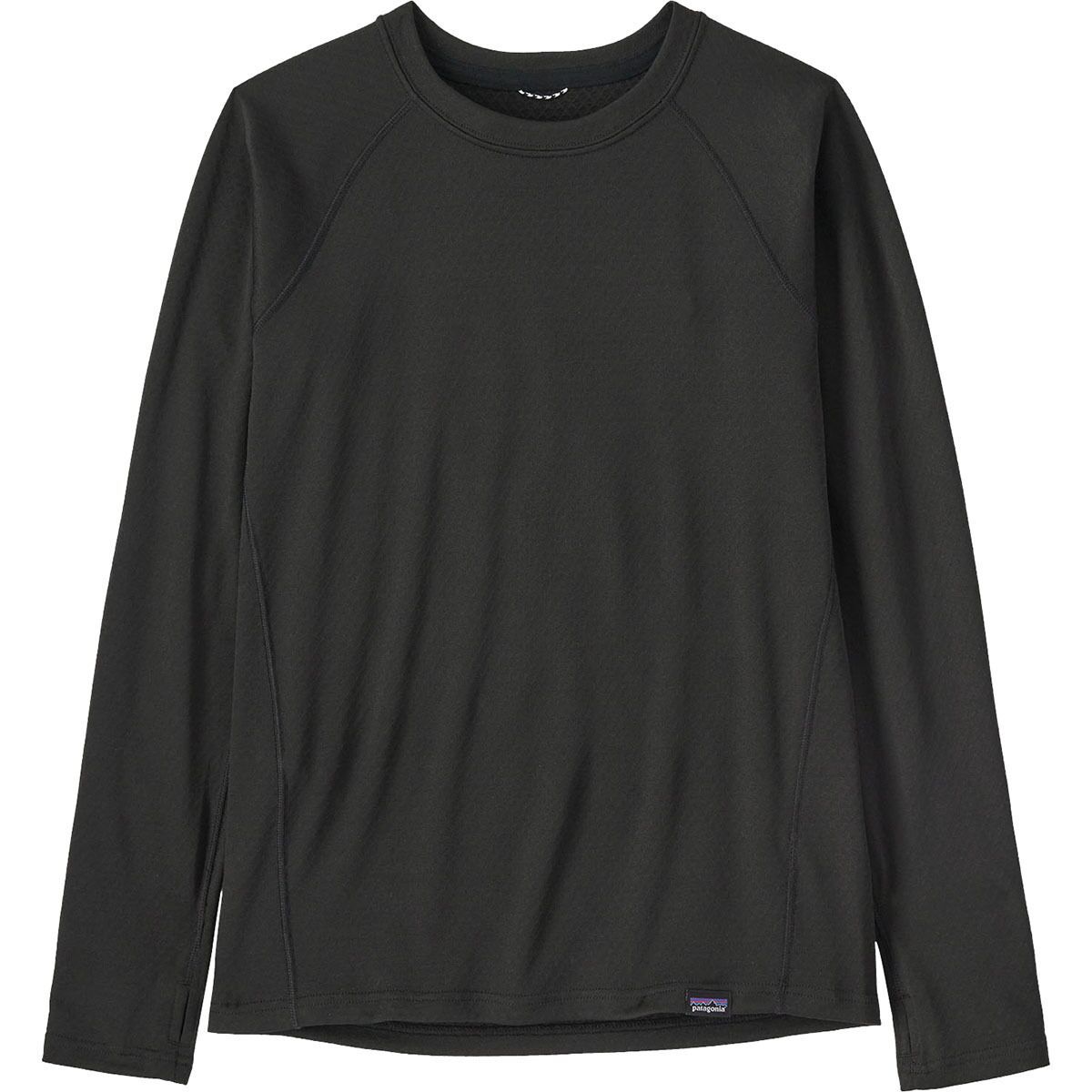
Patagonia Capilene Midweight Crew Top - Kids'
Simple crew neck design at an affordable price. All the performance of Capilene with thumb loops to keep sleeves in place.
- Recycled polyester
- Thumb loops
- Moisture wicking
- Drop-tail hem
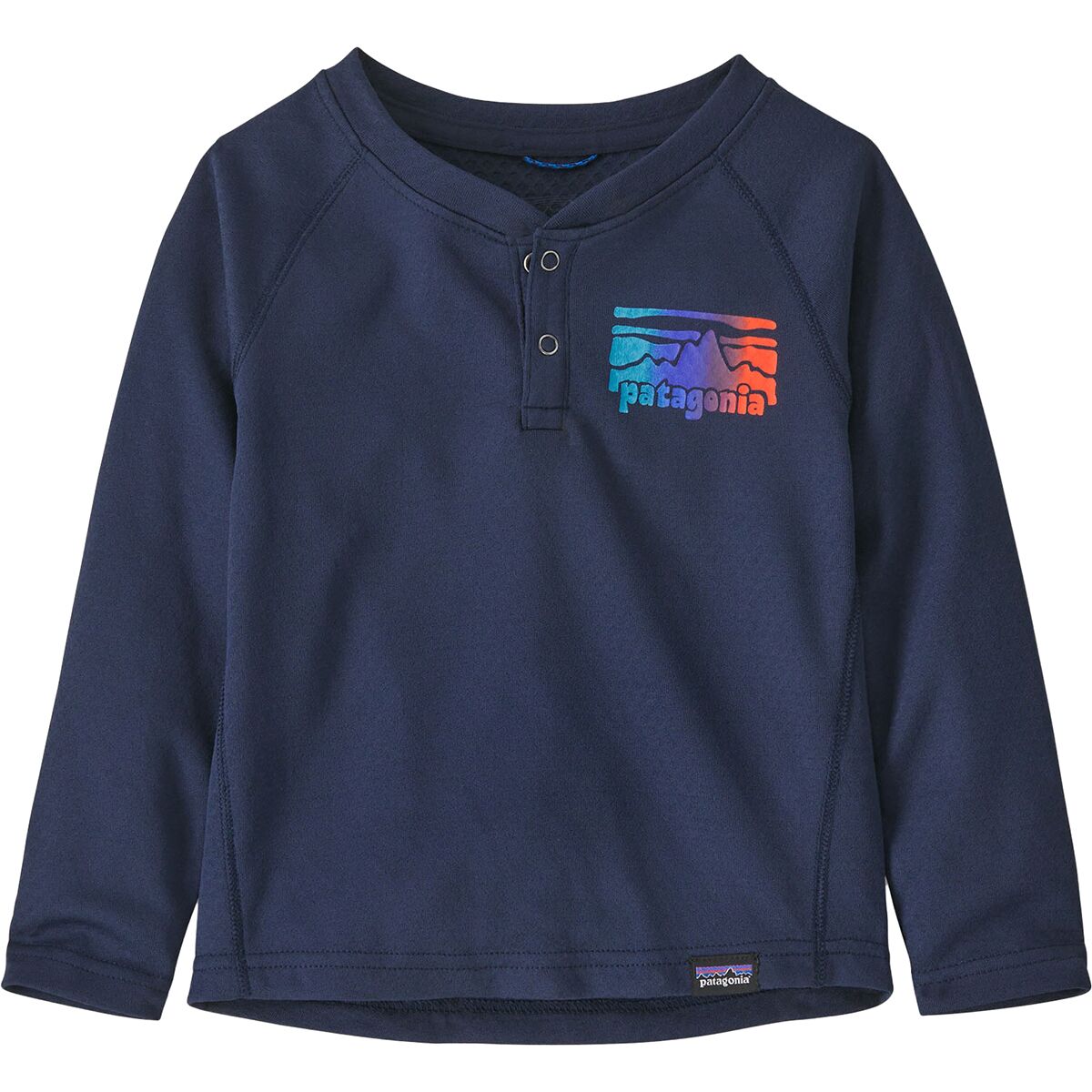
Patagonia Capilene Midweight Henley - Toddlers'
Sized for little ones with snap placket for easy dressing. Soft recycled polyester with HeiQ odor control keeps toddlers comfortable all day.
- Sizes 2T-5T
- Snap placket
- Diamond-grid fleece
- Flatlock seams
Best Synthetic Base Layer Bottoms
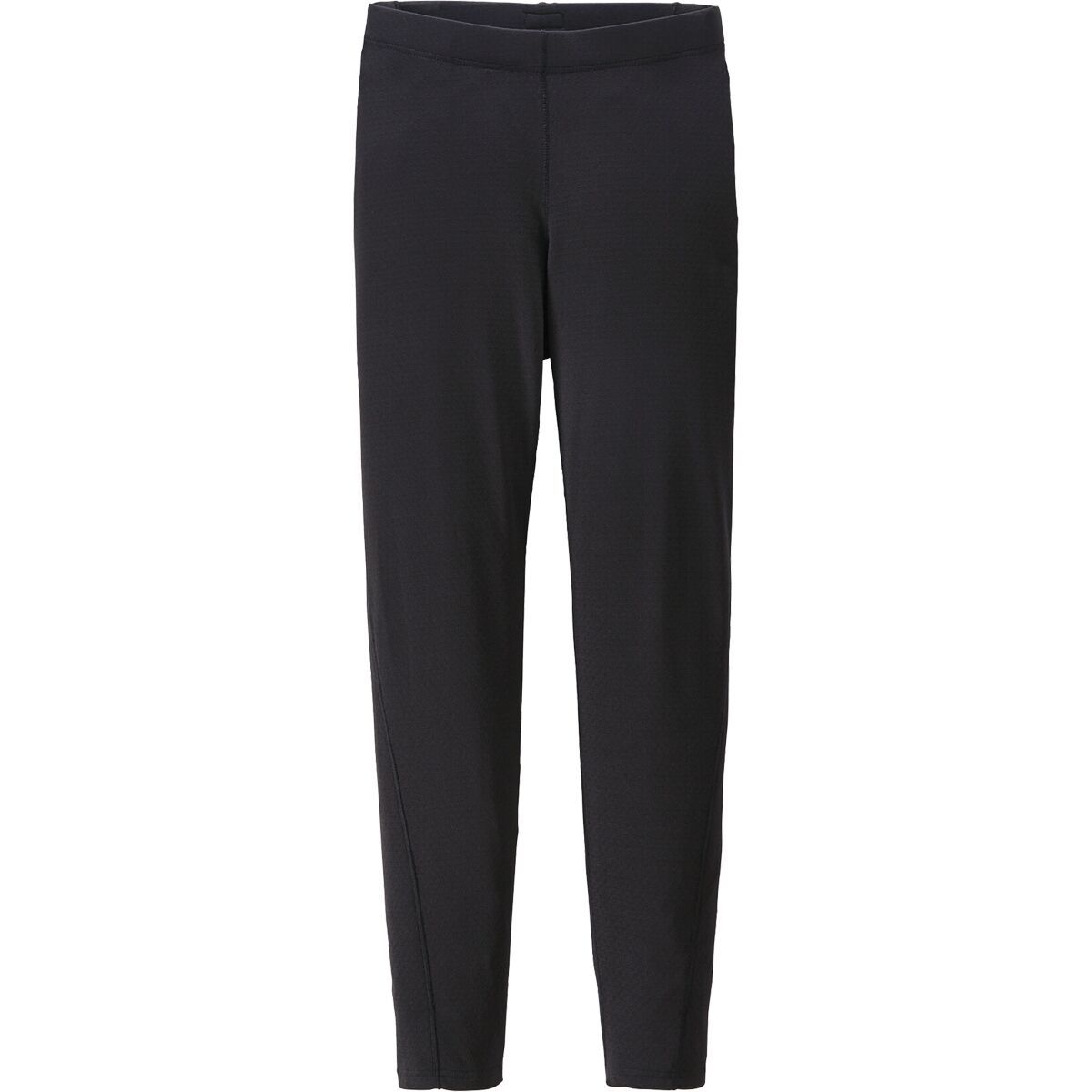
Patagonia Capilene Midweight Bottom - Kids'
Perfect partner to the Capilene tops. Stretchy, comfortable, and wicks moisture all day. Slim fit layers smoothly under snow pants.
- Recycled materials
- Four-way stretch
- Gusseted construction
- Low-profile seams
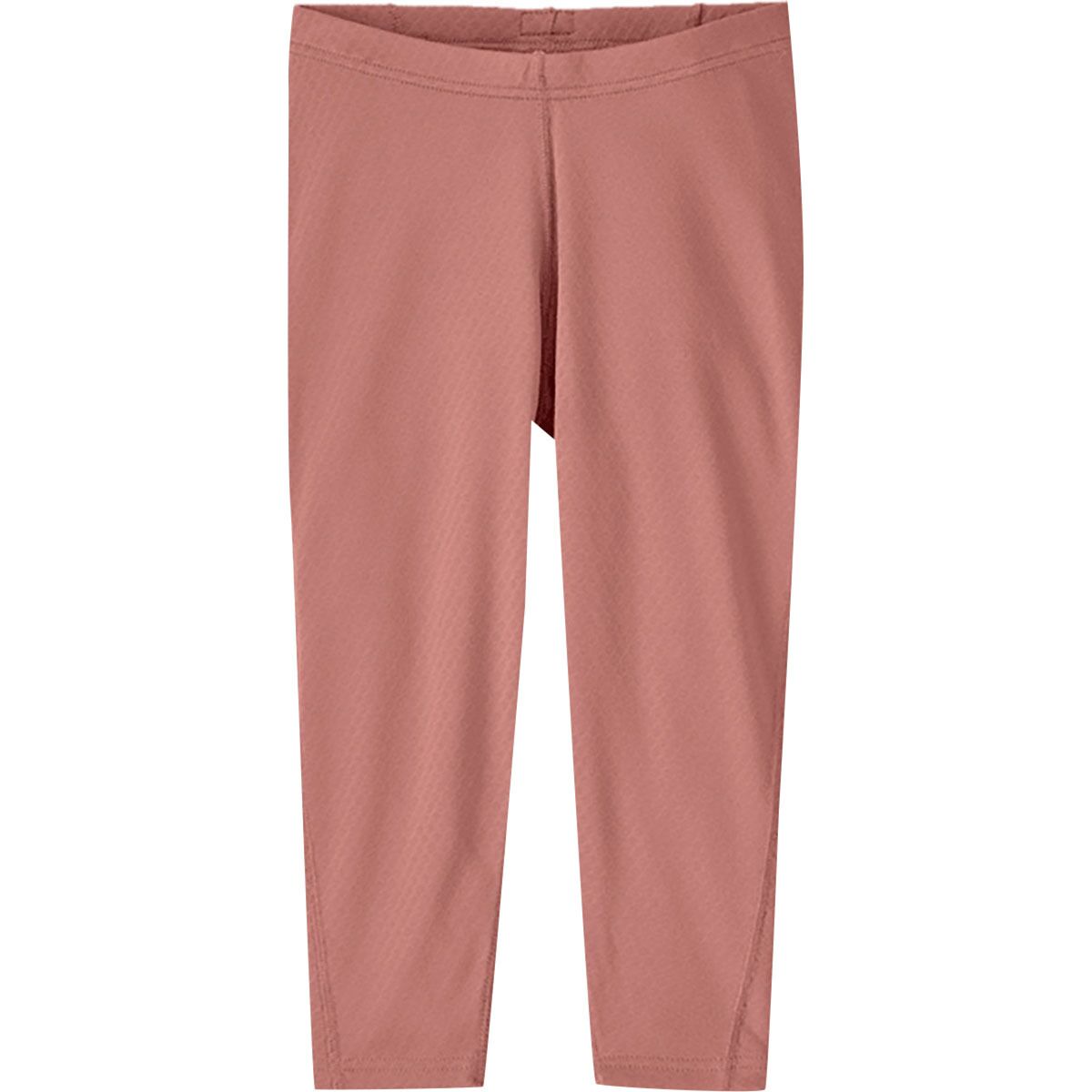
Patagonia Capilene Midweight Bottom - Toddlers'
Designed for little legs with elastic waistband for easy on/off. Diamond knit pattern wicks moisture during active play.
- Sizes 2T-5T
- Elastic waistband
- Gusseted crotch
- Flat seams
Best Merino Wool Base Layers

Icebreaker BodyFit 200 Oasis Crew - Kids'
100% merino wool naturally regulates temperature and resists odors. Incredibly soft against skin, perfect for sensitive kids.
- 100% merino wool
- Natural temperature regulation
- Odor resistant
- Classic crew neck
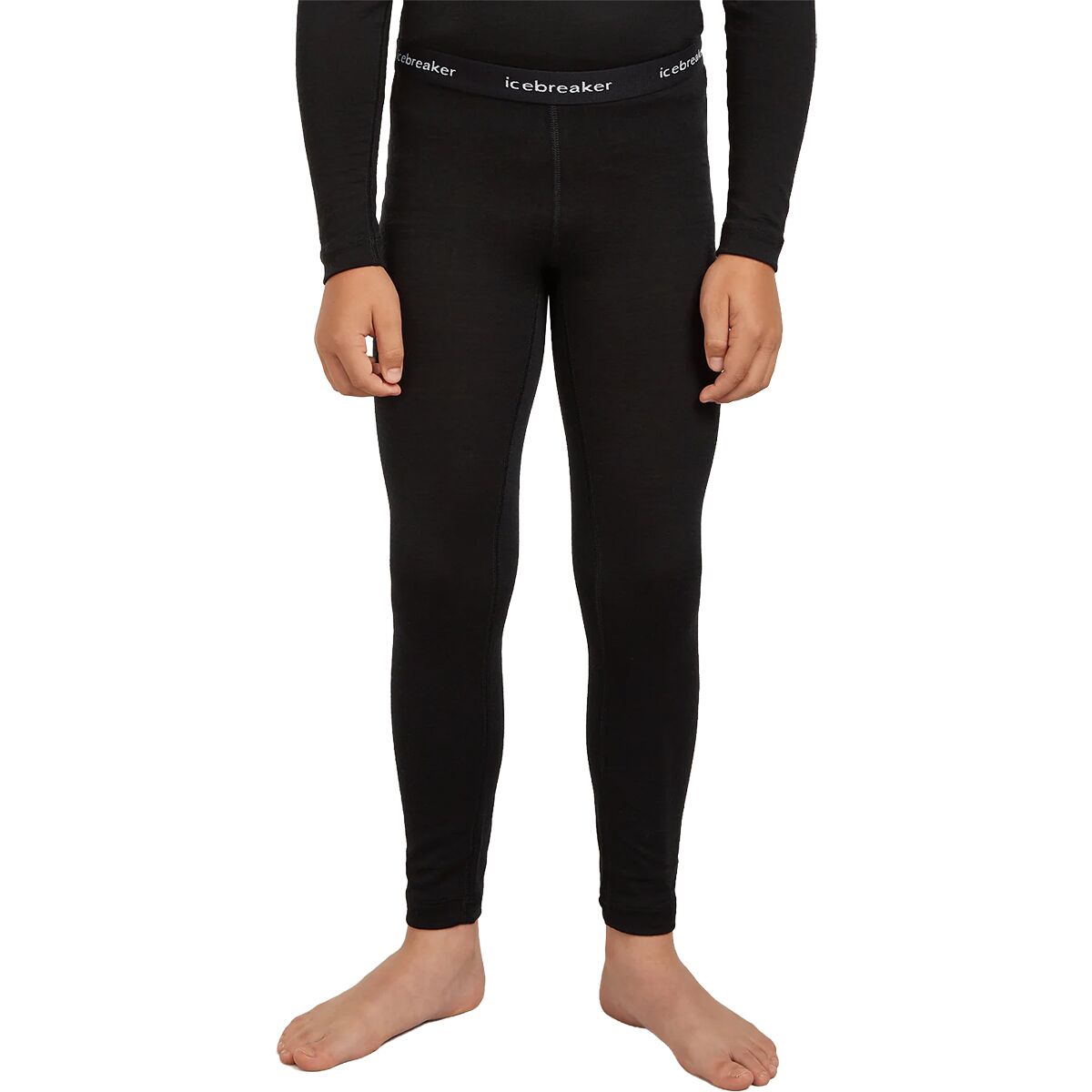
Icebreaker BodyFit 200 Oasis Legging - Kids'
Pure merino wool leggings that regulate temperature like nothing else. Flatlock seams and brushed waistband prevent irritation.
- 100% merino wool
- Flatlock seams
- Brushed waistband
- Gusseted design
Essential Base Layer Accessories
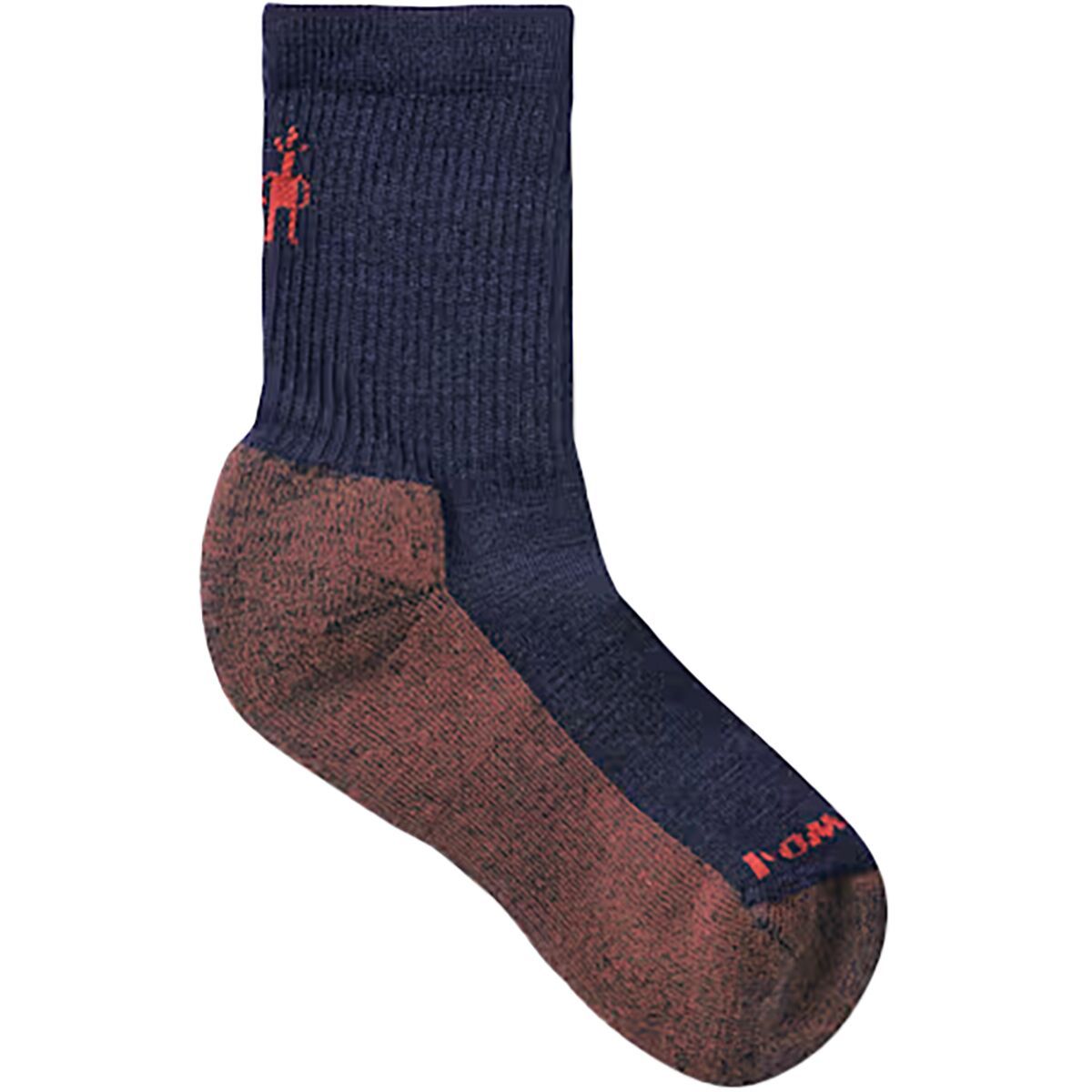
Smartwool Hike Light Cushion Crew Sock - Kids'
Merino wool keeps feet warm and dry all day. Light cushioning provides comfort without bulk in ski boots.
- Merino wool blend
- Moisture wicking
- Light cushioning
- Odor resistant
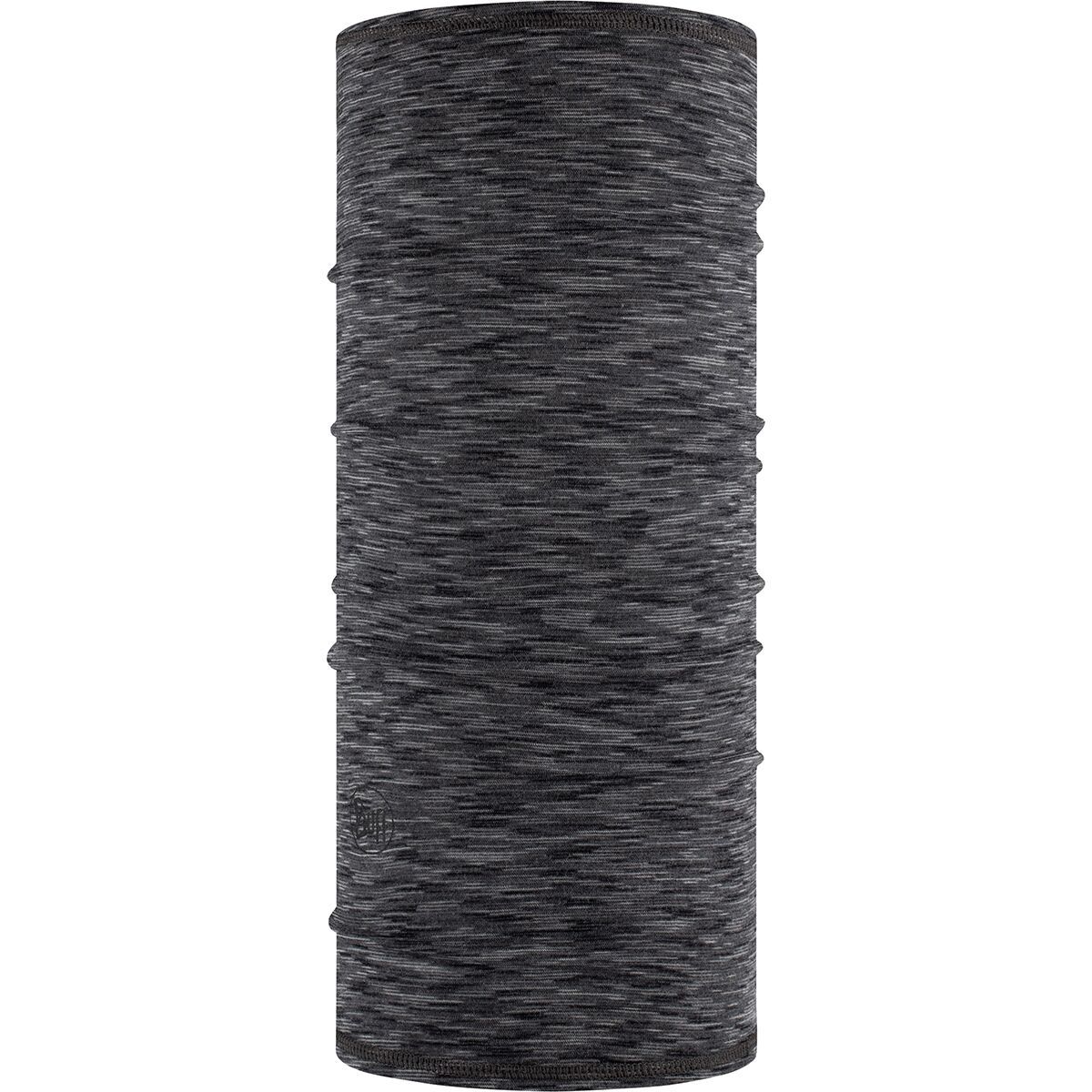
Buff Junior Lightweight Merino Wool Buff - Kids'
Versatile merino wool neck gaiter can be worn multiple ways. Natural temperature regulation and odor resistance.
- Lightweight merino
- Multiple wear styles
- Temperature regulating
- Soft against skin
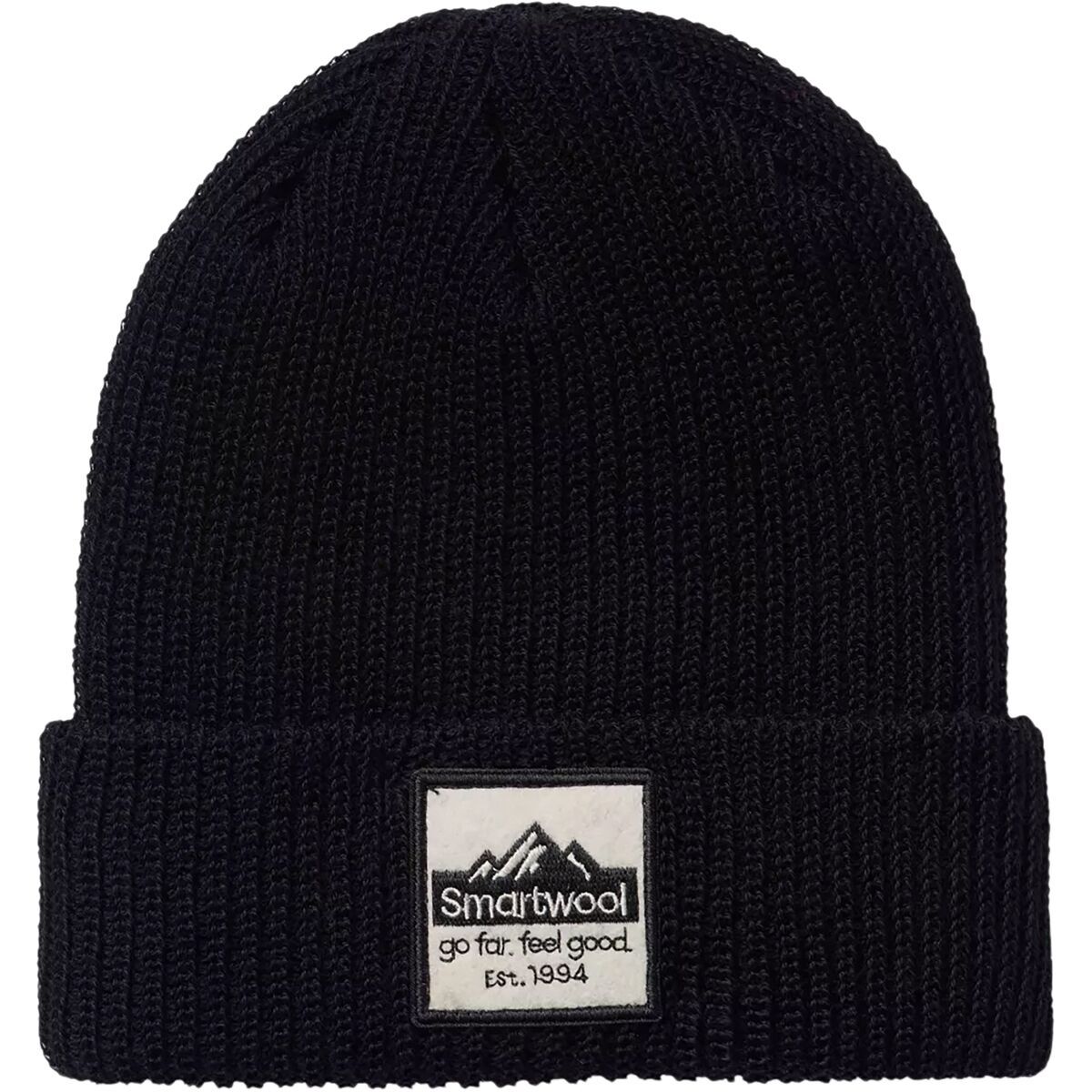
Smartwool Patch Beanie - Kids'
Merino wool beanie wicks moisture and resists odors. Durable recycled polyester yarns for long-lasting wear.
- Merino wool blend
- Recycled polyester
- Moisture wicking
- Odor resistant
Cost Comparison: Outfitting Your Child
Budget Synthetic Setup
- Midweight top (Patagonia Crew)$39
- Midweight bottom (Patagonia)$39
- Wool socks (Smartwool)$17
- Total$95
Premium Merino Setup
- Merino top (Icebreaker 200)$60
- Merino bottom (Icebreaker 200)$60
- Wool socks (Smartwool)$17
- Merino neck gaiter (Buff)$30
- Total$167
Pro tip: Start with a synthetic set. If your child uses it frequently and you want to upgrade, add a merino top for temperature regulation. Synthetic bottoms work great for most kids.
Common Base Layer Mistakes to Avoid
- Cotton anything - Including underwear and socks
- Buying too big - Loose base layers don't work
- Skipping the bottom - Legs need moisture wicking too
- Using fabric softener - Ruins moisture-wicking ability
- Tumble drying merino - Will shrink and felt
- Over-layering - Causes sweating and chills
Related Guides
Affiliate Disclosure
ParentCalc is a Backcountry affiliate. We earn commissions from qualifying purchases at no additional cost to you. This helps support our free parenting resources. All product recommendations are based on our research and real parent feedback. We only recommend products we believe will genuinely help families stay comfortable outdoors.