When Do Babies Point? ☝️
Pointing is one of the most significant communication milestones. Learn when babies start pointing, why it matters so much, and how to encourage this important skill.
Development Essentials
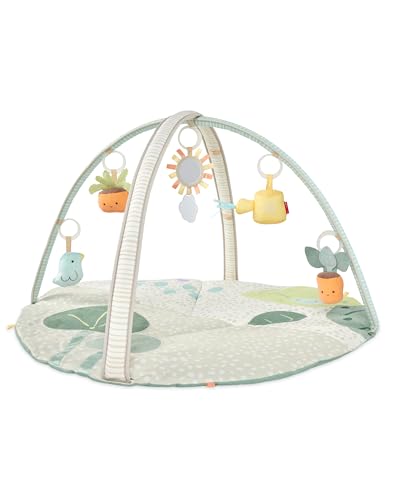
Best Play Gym for Tummy Time
Best OverallConverts from tummy-time mat to sitting play gym, so it stays useful from newborn through toddling rather than being outgrown in a season.
View on AmazonThe Quick Answer
Most babies start pointing between 9 and 14 months of age. Pointing is considered one of the most important pre-language milestones because it shows your baby understands "joint attention" - the ability to share attention between a person and an object. This skill is foundational for language development.
Why Pointing Is Such a Big Deal
Unlike waving or clapping, pointing represents a major leap in social cognition. Here's what makes it so significant:
Joint Attention
Your baby understands that you have your own focus of attention - and they can direct it! This is a sophisticated social concept that's unique to humans and great apes.
Theory of Mind Precursor
Pointing shows early understanding that other people are separate beings with their own perspective. This is an early step toward understanding others' thoughts and feelings.
Language Foundation
Pointing is essentially non-verbal labeling. When your baby points at a dog and you say "dog!" they're learning that things have names. Research links early pointing to vocabulary size at age 2.
Intentional Communication
Your baby is deliberately trying to communicate with you. They have something to say and they're finding a way to say it before they have words.
Types of Pointing
Pointing develops in stages, from simple requesting to sophisticated sharing:
Proto-imperative (Requesting)
Baby points at something they want you to get for them
"Pointing at a cookie on the counter"
Proto-declarative (Sharing)
Baby points at something to share their interest with you
"Pointing at an airplane in the sky just to show you"
Index finger pointing
Uses extended index finger rather than whole hand
"Precise pointing at pictures in books"
Referential pointing
Points while looking back at you to confirm you're looking
"Points at dog, checks that you're watching, then looks back at dog"
Pointing Development Timeline
Reaches toward objects
Baby extends arm toward things they want - a precursor to pointing
Follows your point
Can look where you point (follows your finger with their gaze)
Whole hand pointing
Points with open hand or fist toward desired objects
First index finger points
Begins using extended index finger to point
Points to share interest
Points at things just to show you, not just to request
Sophisticated pointing
Points while looking back at you for response (joint attention)
How to Encourage Your Baby to Point
Point at everything yourself
Be a champion pointer! Point at birds, cars, dogs, interesting things on walks. Say 'Look!' and name what you're pointing at. Your baby learns by watching you.
Follow their gaze and narrate
When your baby looks at something, point to it and name it. 'Oh, you're looking at the cat! Yes, that's a kitty!' This bridges looking and pointing.
Read picture books together
Books are perfect for pointing practice. Point to pictures and ask 'Where's the ball?' Celebrate when they point, even with a whole hand.
Play 'Show Me' games
'Show me your nose!' 'Where's your tummy?' These games encourage pointing at body parts and build pointing skills naturally.
Don't always anticipate needs
If you know what your baby wants, sometimes wait for them to communicate rather than immediately providing it. This encourages them to point or gesture.
Respond enthusiastically when they point
When your baby points at anything, respond with excitement. 'Yes! You see the light! That's a light!' This rewards communication attempts.
What Research Says About Pointing
- Babies who point more frequently at 12 months typically have larger vocabularies at age 2
- Declarative pointing (to share interest) appears to be uniquely human among primates
- Caregiver responsiveness to pointing (naming what baby points at) accelerates language learning
- Pointing is part of the "gesture-word transition" that typically occurs between 10-14 months
When to Discuss with Your Pediatrician
Pointing varies widely among babies. However, consider bringing it up with your pediatrician if:
- Your baby is 18 months and not pointing at all
- Your baby doesn't follow your point with their gaze by 12-14 months
- Your baby only points to request things, never to share interest (by 18 months)
- Your baby doesn't look at you when you talk to them
- You have any other concerns about social or communication development
Note: Absence of pointing alone doesn't indicate a problem. Pediatricians consider the full picture of your baby's development.
Frequently Asked Questions
Related Milestone Guides
Track All Your Baby's Milestones
Use our free Milestone Tracker to monitor your baby's development milestones.
Open Milestone Tracker→Toys for Baby Development

Best Activity Center
Parent FavoriteAdjustable height and a 360-degree seat, which buys you a safe place to put a baby down during the months they can sit but not walk.
View on Amazon