Kids Rock Climbing Guide 2026
The complete parent's guide to introducing your children to rock climbing safely and successfully
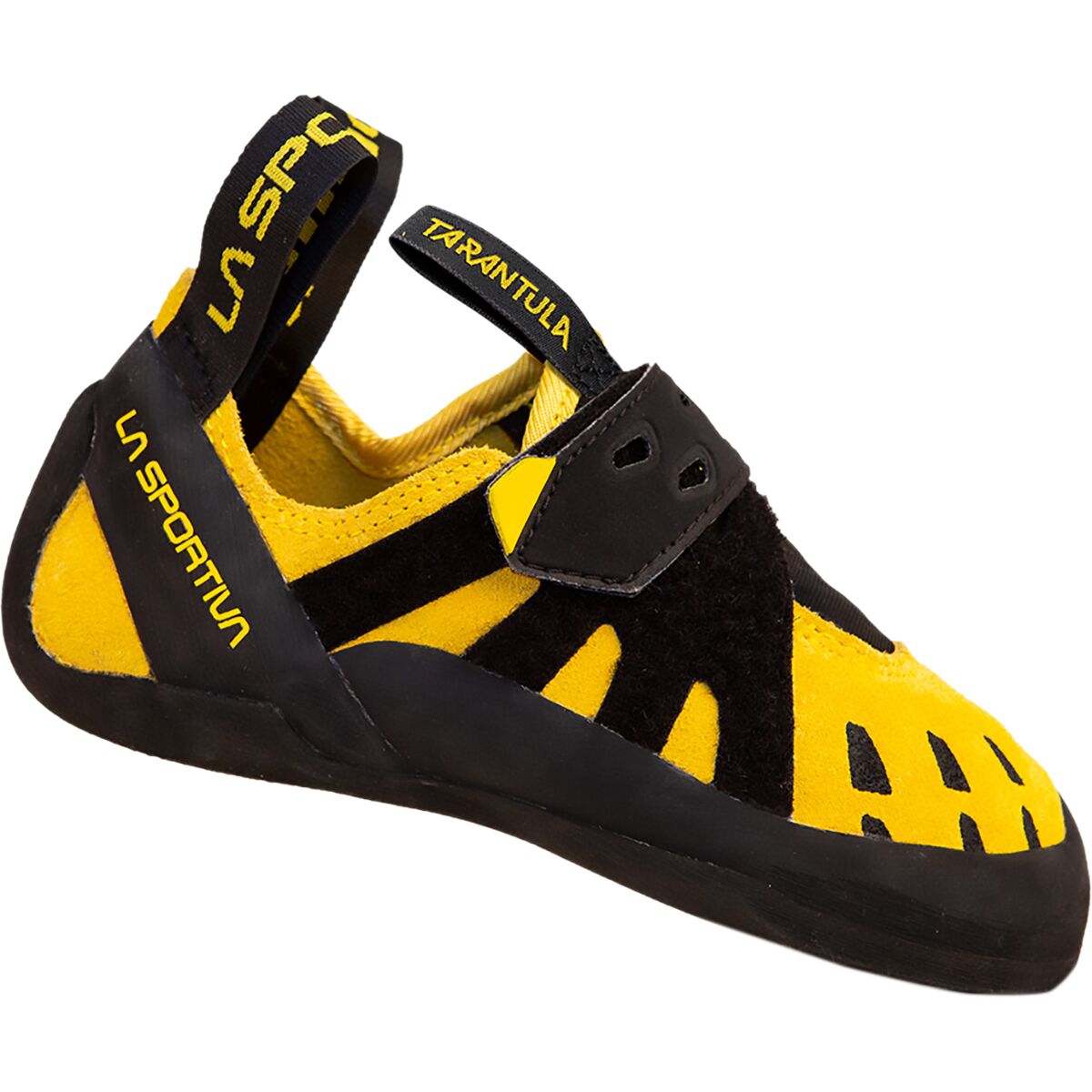
La Sportiva Tarantula Jr Climbing Shoe - Kids
The gold standard for young climbers. FriXion rubber encourages beginners to trust their footholds, while the suede upper ensures a confidence-inspiring fit that molds to growing feet.
Why Rock Climbing is Amazing for Kids
There's something magical about watching a child scale a climbing wall for the first time, the determination in their eyes, the problem-solving as they figure out each move, and the pure joy when they reach the top. Rock climbing isn't just a physical activity; it's a transformative experience that builds confidence, resilience, and a healthy relationship with challenge.
Unlike many sports, climbing is inherently non-competitive in its purest form. It's you versus the wall, which makes it perfect for children who might not thrive in traditional team sports. The American Alpine Club reports that youth climbing participation has increased by over 300% since 2015, driven by the sport's inclusion in the Olympics and the explosion of climbing gyms nationwide.
The benefits extend far beyond the physical. Climbing develops:
Problem-Solving Skills
Every route is a puzzle. Kids learn to read the wall, plan moves ahead, and adapt when their initial strategy fails.
Risk Assessment
Climbing teaches kids to evaluate challenges, understand their limits, and make smart decisions about when to push and when to retreat.
Self-Confidence
Overcoming fear and achieving something difficult builds lasting confidence that transfers to all areas of life.
Full-Body Fitness
Climbing develops strength, flexibility, coordination, and body awareness in ways that feel like play rather than exercise.
This guide will walk you through everything you need to know to get your child started safely in climbing. We've partnered with Backcountry to recommend the best gear at every price point, and we'll cover the fundamentals of gym climbing, outdoor adventures, and how to nurture a lifelong love of the sport.
The Climbing Community
One of the most beautiful aspects of climbing is its community. Climbers of all ages support each other, share beta (tips for climbing routes), and celebrate each other's successes. Introducing your child to climbing means welcoming them into a positive, encouraging community that values effort over outcome.
Related Outdoor Guides
When Can Kids Start Rock Climbing?
One of the most common questions parents ask is "Is my child old enough to climb?" The answer depends on several factors, including whether you're talking about indoor gym climbing or outdoor rock climbing, and the individual child's physical and emotional development.
Indoor Gym Climbing
Many gyms have toddler areas with low bouldering walls (under 6 feet) with thick crash pads. This is about building comfort and having fun, not technique.
Most gyms offer structured youth programs starting at age 4-5. Kids can start learning basic technique, following simple routes, and understanding safety commands.
By age 6-7, most children can participate in all gym activities including top-rope climbing on full-height walls with proper supervision and belay.
Key benefit: Controlled environment, professional supervision, consistent surfaces, and climate control make indoor gyms ideal for young beginners.
Outdoor Rock Climbing
Easy outdoor bouldering on low, flat rocks with good landing zones. Focus is on scrambling and exploring rather than actual climbing. Always with experienced adult supervision.
With experienced adult belayers or professional guides, kids can start top-rope climbing on easy outdoor routes. Helmet required, appropriate harness essential.
Kids can handle more challenging outdoor routes, learn basic rope skills, and start understanding climbing ethics and outdoor safety.
Important: Outdoor climbing introduces real hazards like loose rock, weather, and terrain. Always climb with experienced partners and consider hiring a guide for your child's first outdoor experiences.
Is Your Child Ready? A Checklist
Age is just one factor. Here are signs your child is ready to start climbing:
Physical Readiness:
- Can hang from monkey bars for 10+ seconds
- Has basic body awareness and coordination
- Comfortable with heights (or willing to work on it)
- Can follow multi-step instructions
Emotional Readiness:
- Shows interest in climbing (playgrounds, rocks, furniture!)
- Can handle frustration without melting down
- Listens to and follows safety instructions
- Trusts the adult belayer
Pro Tip: Don't rush it! If your child isn't ready, forcing them can create negative associations with climbing. Let them watch others climb, play on low bouldering walls, and come to it naturally when they're ready.
Best Kids Climbing Shoes 2026
The right climbing shoes make a huge difference in your child's experience. Unlike adult shoes, kids' climbing shoes prioritize comfort and natural foot development over aggressive performance features. Look for flat profiles (no aggressive downturn), comfortable fits that don't crush toes, and easy-on closures for independence.
How to Size Kids' Climbing Shoes
Do:
- Fit to their current size (not room to grow)
- Toes should be flat, not curled or scrunched
- Snug heel with no slipping
- Comfortable enough to wear for 30+ minutes
Don't:
- Size up "for growth" - loose shoes are unsafe
- Get aggressive downturned shoes for beginners
- Ignore complaints of pain or numbness
- Use street shoes for climbing
La Sportiva Tarantula Jr Climbing Shoe - Kids'
The gold standard for young climbers. FriXion rubber encourages beginners to trust their footholds, while the suede upper ensures a confidence-inspiring fit that molds to growing feet.
- FriXion rubber sole
- Suede upper
- Sizes 28-35 EU
- Hook-and-loop closure
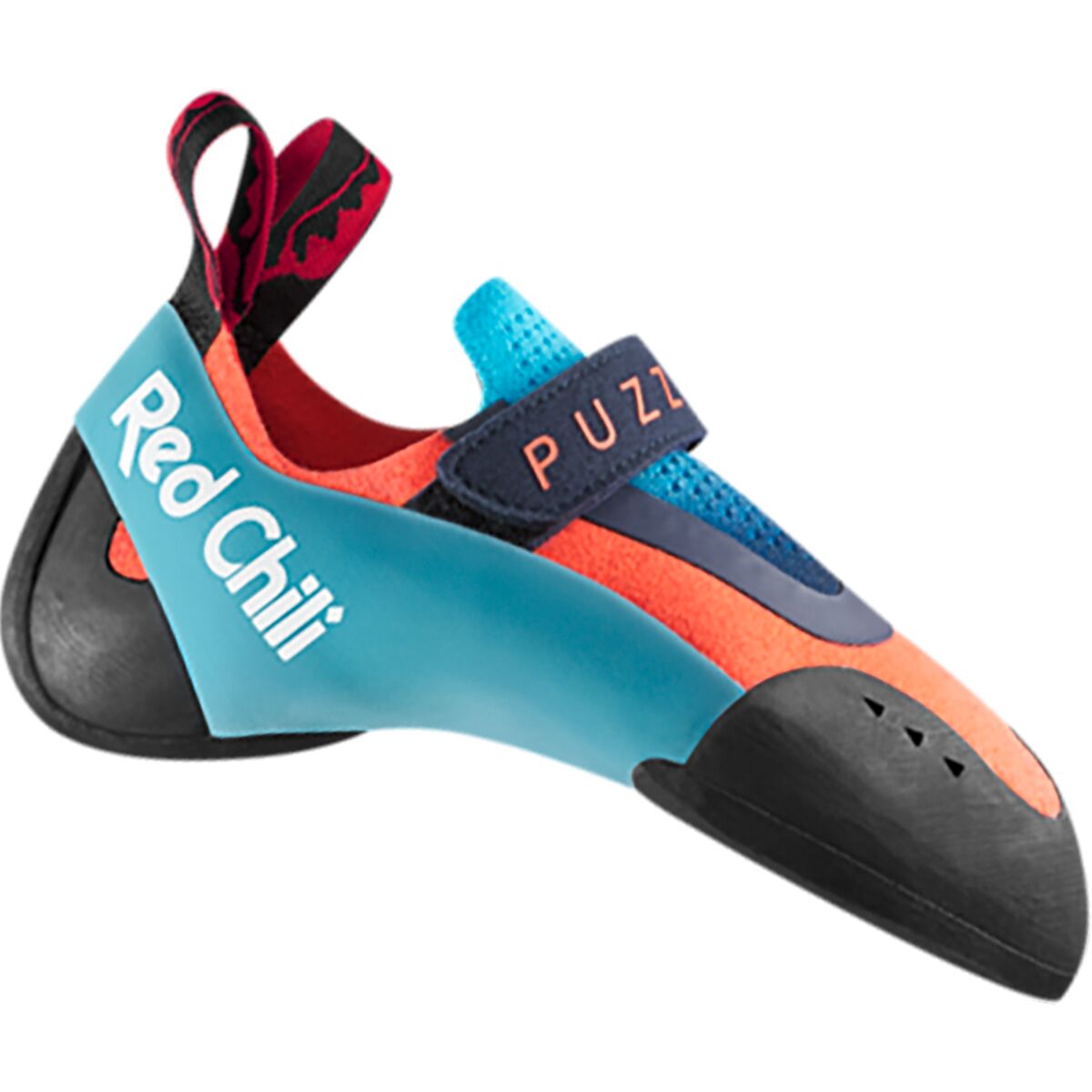
Red Chili Puzzle Climbing Shoe - Kids'
For little climbers progressing quickly. Aggressive downturn with moderate asymmetry encourages problem-solving on gym walls and outdoor boulders.
- Aggressive downturn
- Moderate asymmetry
- Performance rubber
- Velcro closure
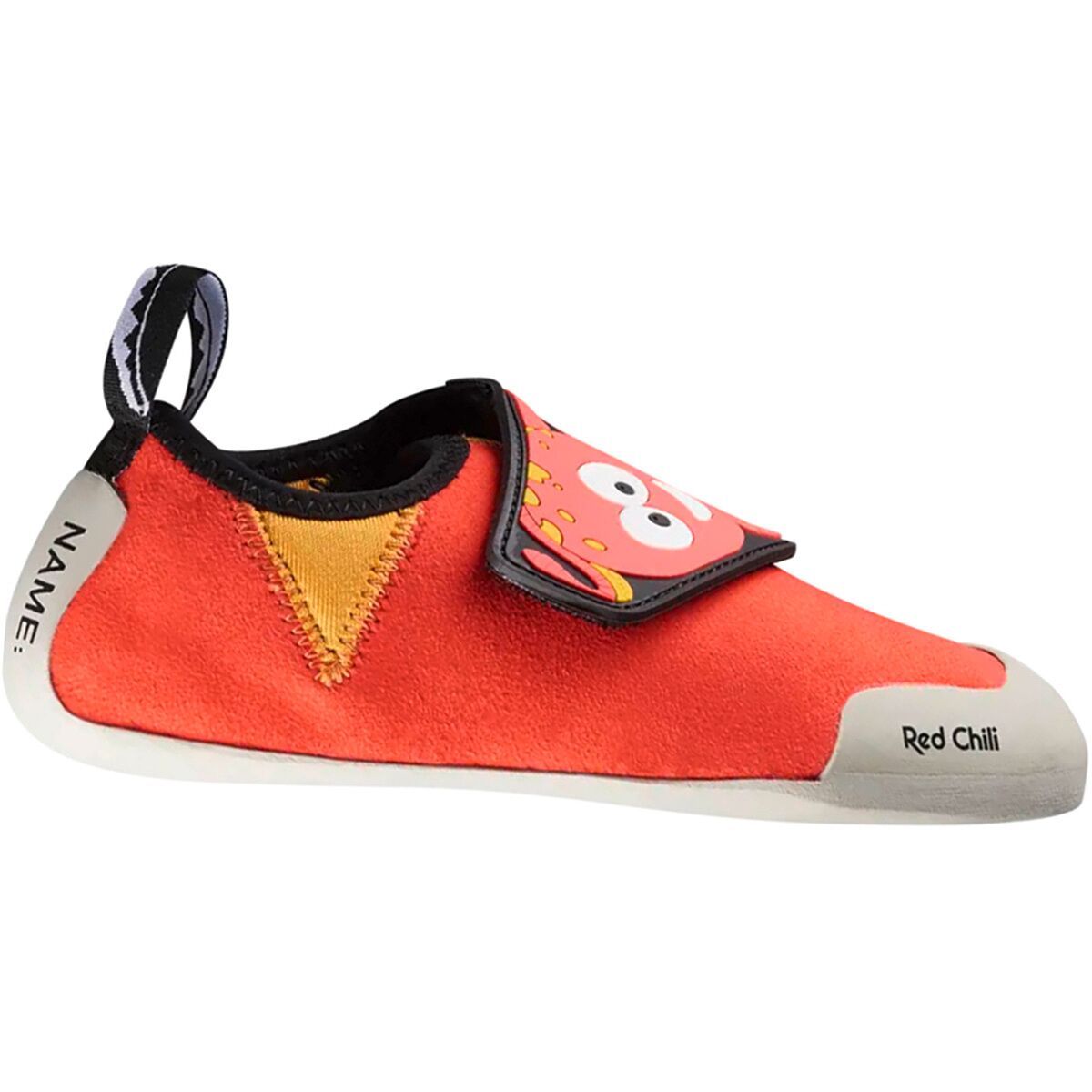
Red Chili Pulpo Climbing Shoe - Kids'
Every detail designed for little senders. Hook-and-loop closure and left-right color-coding make it simple for kids to gear up independently. Neutral profile protects growing feet.
- Left-right color coding
- Flexible heel insert
- Neutral profile
- Growth-friendly design
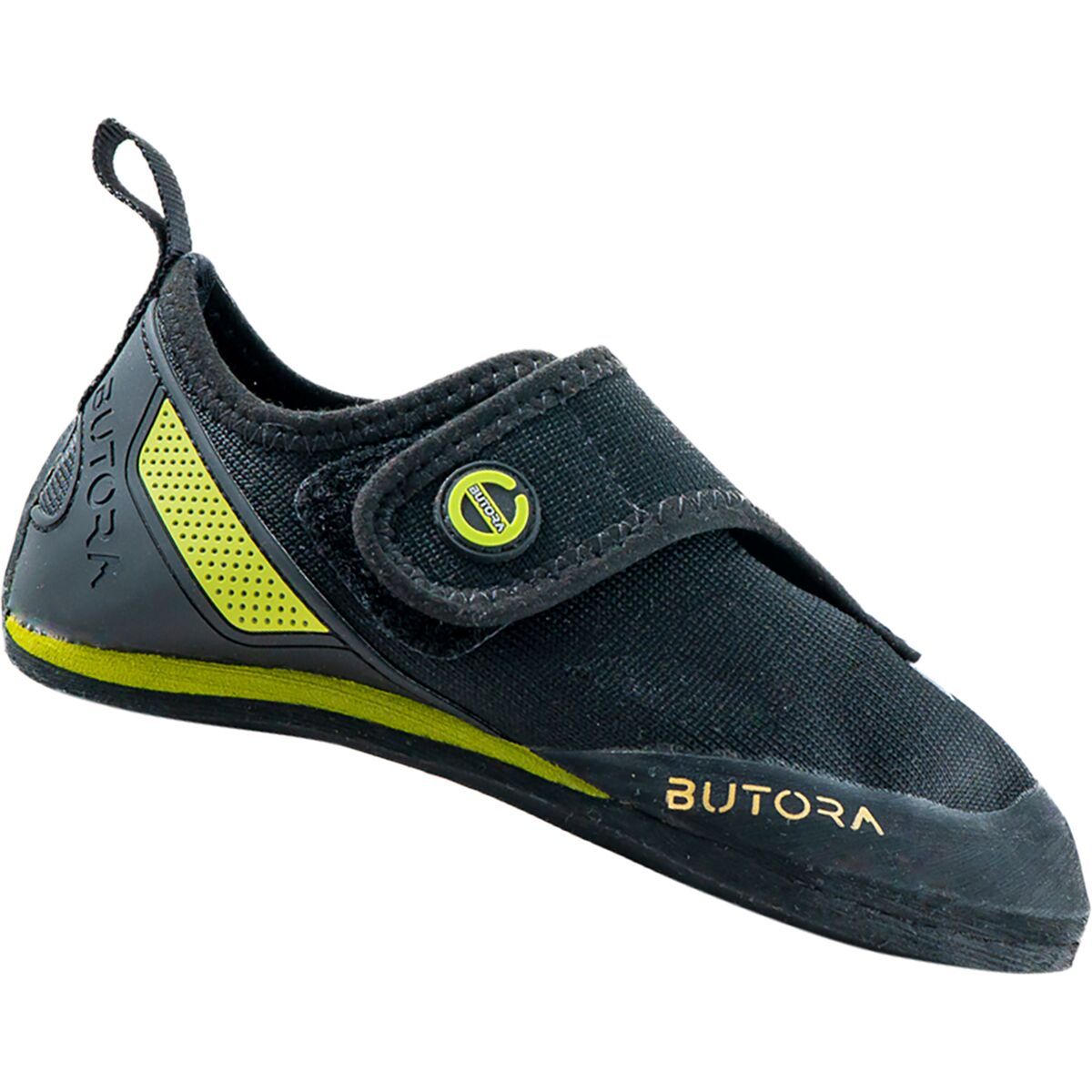
Butora Brava Climbing Shoe - Kids'
Takes the stress out of kids climbing sessions. Easy to get on, supportive flat profile, and NEO rubber sticks to gym walls and boulders alike. Parents love the adjustability for growing feet.
- NEO rubber sole
- Synthetic knit upper
- EVA-cushioned midsole
- Wide velcro strap
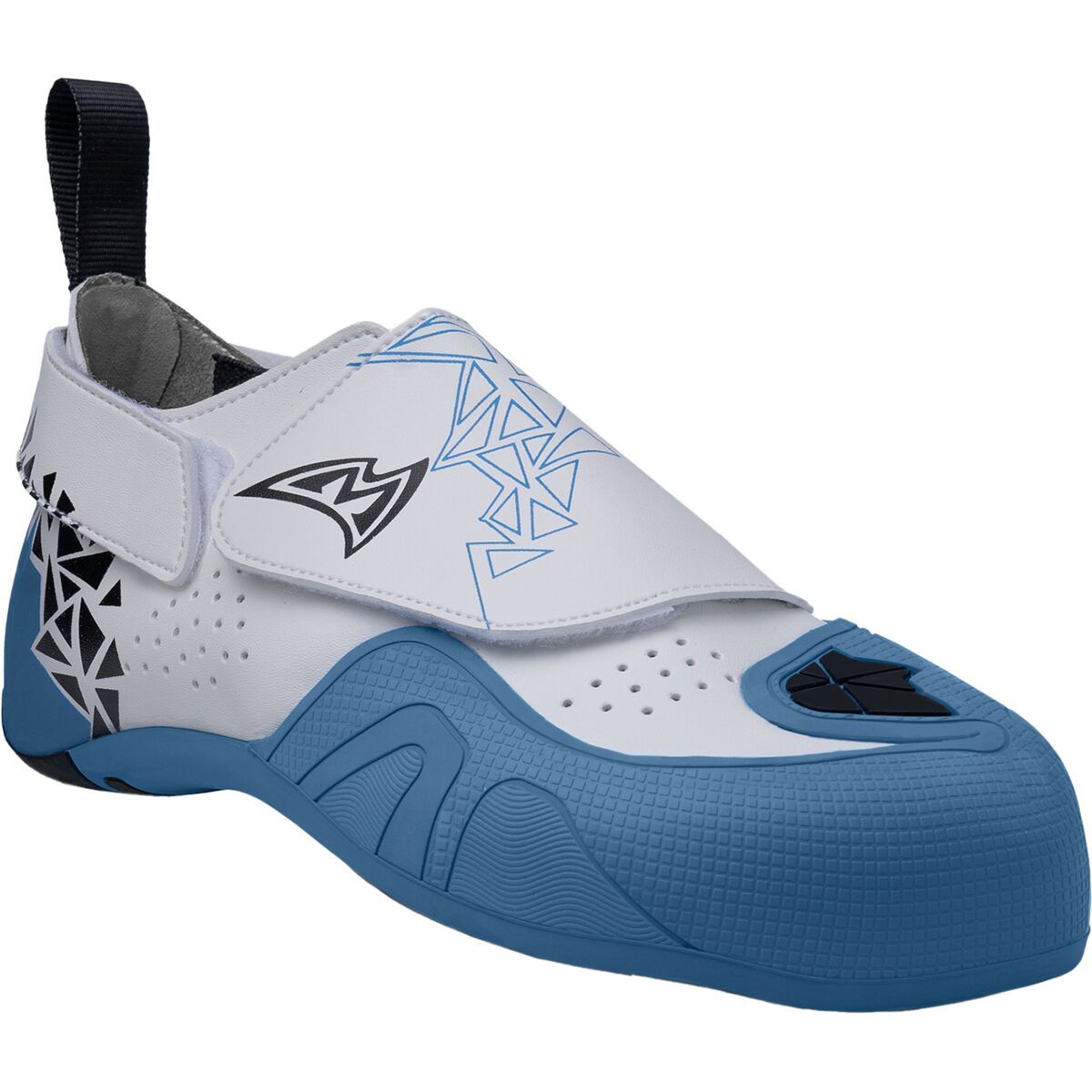
Mad Rock Mad Monkey III Climbing Shoe - Kids'
Performance fit that lets feet rest naturally and grow with them. Adjustable heel and instep volumes provide a second-skin fit while the neutral profile protects developing feet.
- Adjustable heel volume
- Arch insert included
- High-volume last
- Grippy rubber
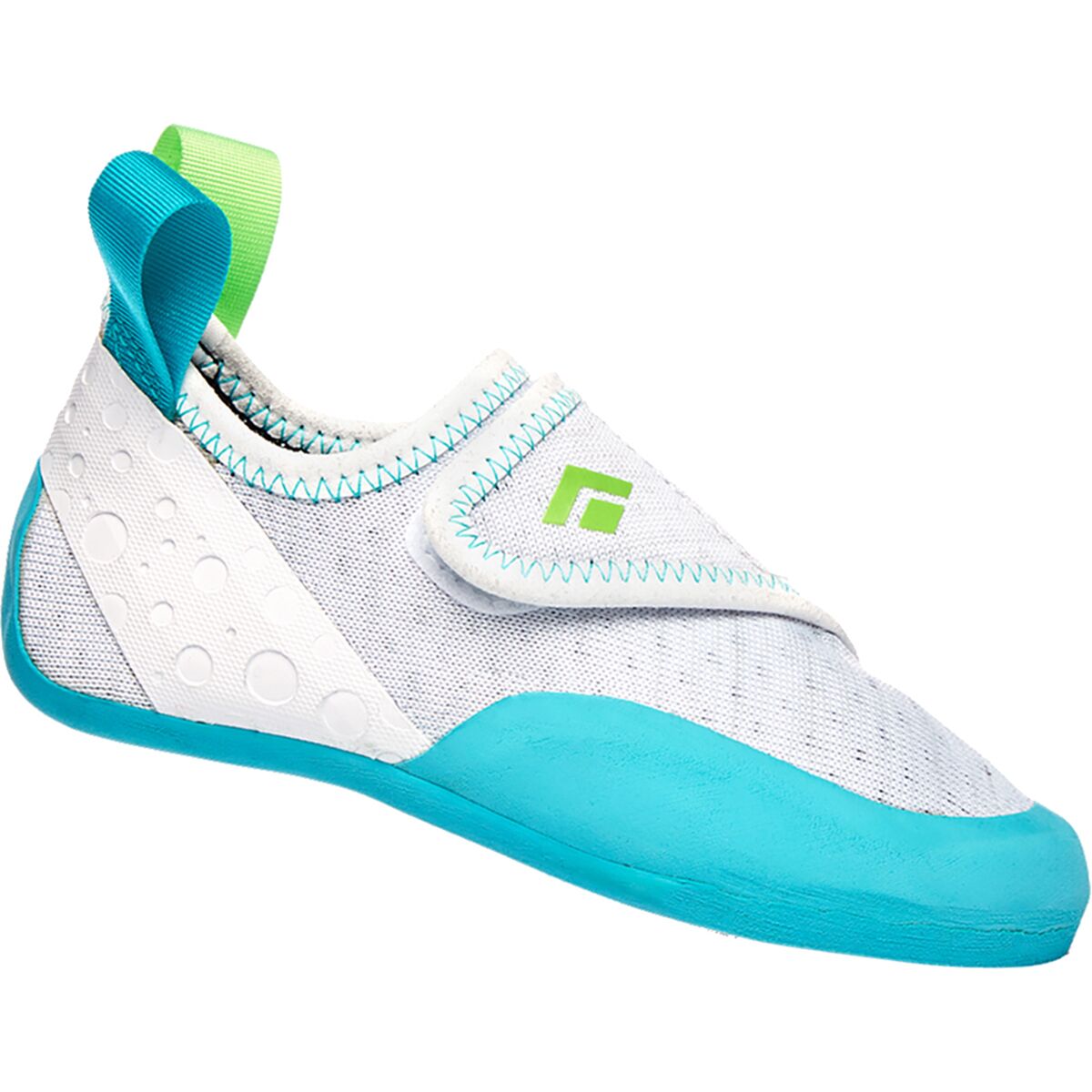
Black Diamond Momentum Climbing Shoe - Kids'
Unique knit upper enhances breathability without hindering durability - and decreases foul smells! NeoFriction rubber sole is molded to the shoe for increased longevity and traction.
- Knit upper
- NeoFriction rubber
- Minimal stretch
- Odor-resistant
Budget Tip: Many climbing gyms rent kids' shoes for $3-5 per session. This is a great option while your child is still growing quickly or deciding if they enjoy the sport. Once they're committed, investing in their own shoes (even entry-level) provides better fit and hygiene.
Kids Climbing Helmets
Helmets are essential for outdoor climbing and recommended for indoor climbing (especially for young beginners). A climbing helmet protects against falling rocks and debris outdoors, and impacts from falls or swinging into the wall indoors.
Bike Helmets vs. Climbing Helmets
Regular bike helmets are NOT designed for climbing. Climbing helmets protect from impacts from above (falling rocks) as well as front, back, and side impacts. Always use a helmet certified for climbing (CE EN 12492 or UIAA 106).
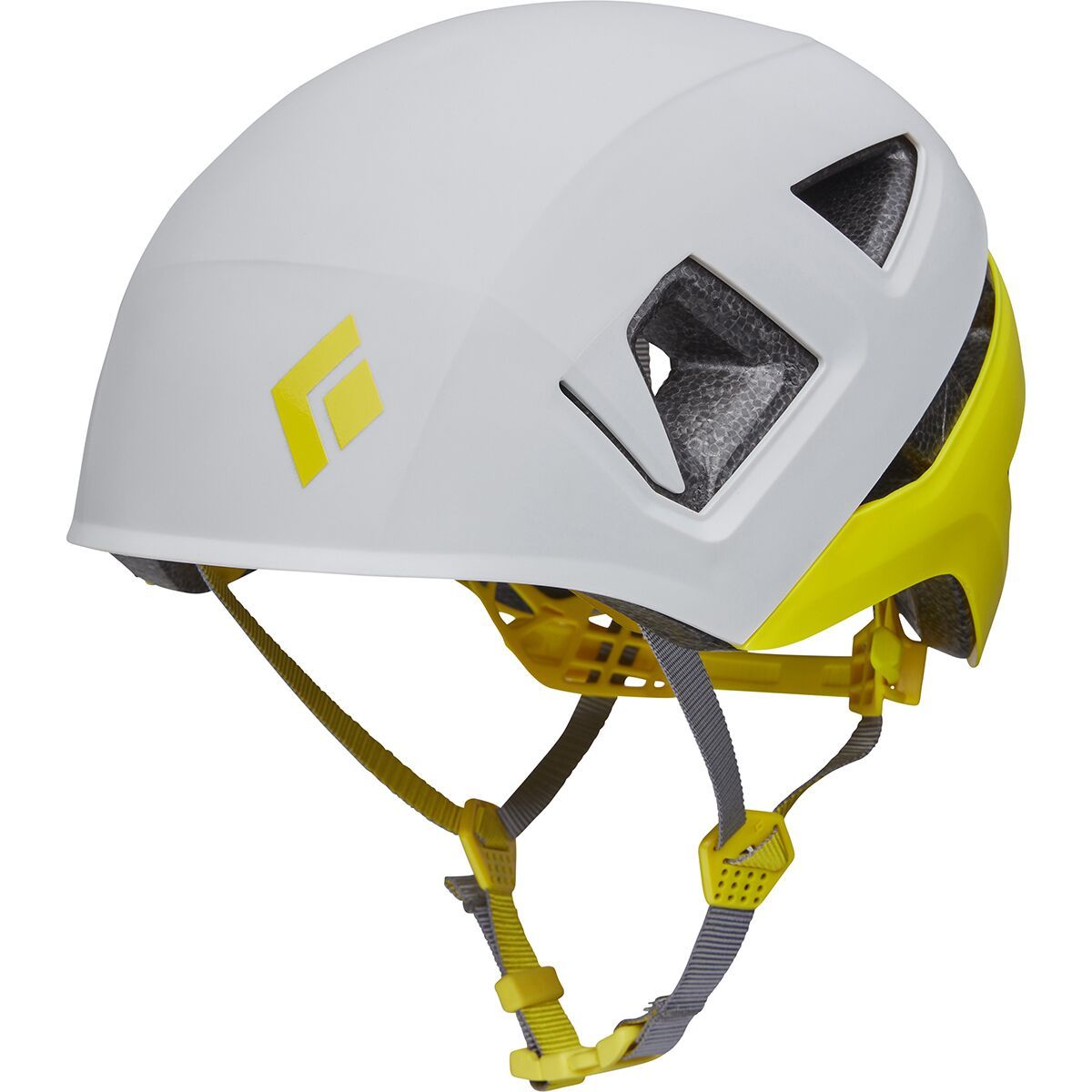 Best Overall
Black Diamond Capitan MIPS Helmet - Kids'
$110Pulls double duty with bike and climbing certifications. Large breezy vents and lightweight comfortable design. MIPS technology provides rotational impact protection.
- MIPS technology
- Dual bike/climb certified
- Large ventilation
- Adjustable fit system
What to Look for in a Kids' Climbing Helmet
MIPS Technology
Reduces rotational forces on the brain during angled impacts
Adjustable Fit
Dial or ratchet systems provide secure, customizable fit as kids grow
Ventilation
Large vents keep heads cool during active climbing sessions
For more helmet safety information, see our Kids Bike Safety Guide which covers general helmet fit and maintenance.
Kids Climbing Harnesses
Choosing the right harness for your child is critical for safety. Kids' body proportions are different from adults, they have higher centers of gravity and narrower hips, which means they need harnesses designed specifically for their bodies.
Full-Body Harnesses (Ages 3-7)
For small children with undeveloped hips, full-body harnesses wrap around the chest and shoulders to prevent flipping upside-down during falls or lowering.
- Prevents inversion (flipping upside-down)
- Distributes forces across larger body area
- Required for children under 40 lbs
Sit Harnesses (Ages 6+)
Once children develop more pronounced hips (typically around age 6-8), they can transition to traditional sit harnesses similar to adult designs.
- More freedom of movement
- Easier to put on independently
- Look for adjustable leg loops for growth
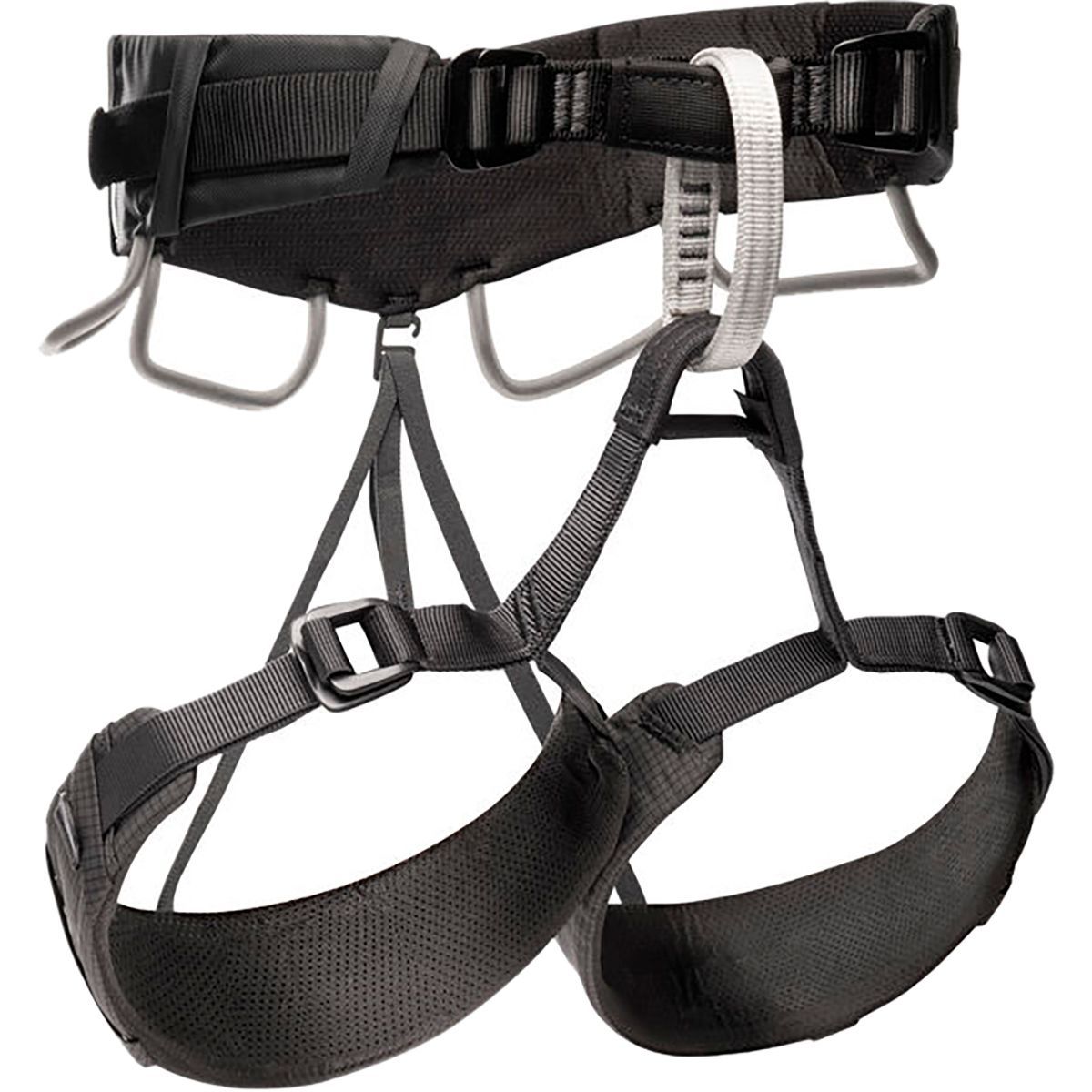 Best Adjustable
Black Diamond Momentum 4S Harness
$90Maximum adjustability for a large range of fit. Two speed buckles at the waist and one at each leg loop for easy adjustment whether climbing with winter layers or going minimalist.
For youth with adult proportions (typically 8+ years)
- 4 speed buckles
- Bullhorn waist belt
- Fits XXS-S range
- Growing-kid friendly
How to Fit a Kids' Climbing Harness
Correct Fit:
- Waist belt sits above hip bones, snug but not tight
- Can fit two flat fingers between belt and body
- Leg loops tight enough not to slide, loose enough to pinch a fold of fabric
- Belay loop should hang at belly-button level
Safety Check:
- All buckles are doubled-back correctly
- No twisted straps or leg loops
- Child cannot slip out when lifted by belay loop
- Have gym staff verify fit before first climb
Gym Tip: Most climbing gyms provide harnesses for kids as part of their rental package. This is perfect for beginners since staff can ensure proper fit. Once your child is climbing regularly (2+ times per month), owning a harness becomes more practical and hygienic.
Indoor vs. Outdoor Climbing with Kids
Both indoor gyms and outdoor crags offer unique benefits for young climbers. Most families start indoors and gradually transition to outdoor climbing as kids develop skills and experience.
| Aspect | Indoor Gym | Outdoor |
|---|---|---|
| Safety Level | Controlled environment, staff supervision, consistent conditions | Variable conditions, real hazards, requires experience |
| Learning Curve | Gentle progression, color-coded routes, immediate feedback | Steeper learning curve, natural holds, reading rock |
| Gear Required | Shoes, harness (often rental available) | Shoes, harness, helmet, rope, protection, approach gear |
| Weather | Climate controlled, year-round access | Weather dependent, seasonal in many areas |
| Cost | $15-25/day pass, $50-100/month membership | Free access, but higher gear investment |
| Experience | Social, convenient, consistent | Adventure, nature connection, memorable |
Why Start Indoors
Advantages for Kids:
- Safe, padded falls on bouldering walls
- Color-coded routes make progress visible
- Trained staff to assist with technique
- Social environment with other young climbers
- Auto-belays for independent practice
What to Look For:
- Dedicated youth climbing programs
- Low bouldering walls (<10 ft) for beginners
- Family-friendly hours and pricing
- Clean, well-maintained facility
- Birthday party options (great for introducing friends!)
Taking Kids Outdoor: What to Know
Best First Outdoor Experiences:
- Guided trips with professional instruction
- Easy bouldering at kid-friendly areas
- Short approaches (under 30 minutes)
- Good shade and comfortable temps
Essential Outdoor Gear:
- Climbing helmet (mandatory!)
- Proper climbing shoes
- Sunscreen, water, snacks
- First aid kit
Recommendation: For your child's first outdoor climbing experience, consider hiring a professional guide. They provide all safety equipment, know the best kid-friendly routes, and can focus entirely on your child's experience while you enjoy watching. Many guide services offer family packages starting around $200-300 for a half-day.
Teaching Kids to Climb Safely
Safety in climbing isn't just about gear, it's about building habits, communication skills, and a healthy respect for the sport. Teaching these fundamentals early creates lifelong safe climbers.
Essential Climbing Commands (Teach These First!)
Climber Says:
- "On belay?"
Asking if belayer is ready
- "Climbing!"
About to start climbing
- "Take!"
Take in slack, I need to rest
- "Lower!"
Ready to come down
Belayer Responds:
- "Belay on!"
I'm ready, you're safe
- "Climb on!"
Go ahead, I've got you
- "Got you!"
Rope is tight, rest safely
- "Lowering!"
Starting to lower you down
Ages 4-6: Foundation Safety
- Learn to climb down, not jump off bouldering walls
- Understand "falling zone", stay clear of other climbers
- Keep hands and feet on holds, not other climbers
- Learn to put on and take off harness with help
Ages 7-9: Building Skills
- Master all climbing communication commands
- Put on own harness correctly (adult verification)
- Understand falling technique (soft landings, roll if needed)
- Basic helmet fitting and adjustment
Ages 10+: Advanced Safety
- Learn to tie figure-eight knot (with supervision)
- Understand buddy checks before climbing
- Begin learning to belay (with instructor)
- Outdoor hazard awareness (loose rock, weather, etc.)
Common Parenting Mistakes to Avoid
- Pushing too hard: Let kids progress at their own pace
- Grabbing their body: Never grab a child on the wall, use verbal coaching only
- Dismissing fear: Fear of heights is real; acknowledge and work through it
- Comparing to others: Every child develops differently
- Skipping safety checks: Always verify harness fit and knots
- Over-correcting: Let them problem-solve; too much advice is overwhelming
Finding Kid-Friendly Climbing Gyms
Not all climbing gyms are created equal when it comes to kids. The best family-friendly gyms offer dedicated youth programs, appropriate facilities, and welcoming environments for young climbers and their parents.
Youth Programs
- Age-appropriate classes
- Competition team options
- Summer camps
- Birthday party packages
Facilities
- Low bouldering walls (<10 ft)
- Thick, well-maintained crash pads
- Auto-belay devices
- Clean restrooms with changing areas
Family-Friendly
- Family membership discounts
- Kids' gear rental
- Viewing areas for parents
- Snack bar or vending
Questions to Ask Before Joining
- 1.What age do you start youth programs?
- 2.What's the staff-to-child ratio in classes?
- 3.Are instructors certified (AMGA, CWI)?
- 4.Do you have full-body harnesses for small kids?
- 5.Can parents belay their own children?
- 6.What's included in youth memberships?
- 7.Are there "family climb" times or sessions?
- 8.Can we do a trial session before committing?
How to Find Climbing Gyms Near You
Online Resources:
- Climbing Business Journal gym directory
- USA Climbing gym finder
- Google Maps "climbing gym near me"
- Local parent groups on Facebook
Major Gym Chains:
- Movement Climbing (nationwide)
- Planet Granite / Earth Treks (west/east coasts)
- Brooklyn Boulders (northeast)
- Touchstone Climbing (California)
Frequently Asked Questions
Is rock climbing dangerous for kids?
When practiced with proper supervision, equipment, and training, rock climbing is remarkably safe. According to the Climbing Wall Association, the injury rate for climbing gym visitors is 0.02 per 1,000 climbs, lower than many team sports. Indoor bouldering with thick crash pads and low walls is especially low-risk. The key is proper instruction, good equipment, and supervision appropriate to your child's age and ability level.
What age can kids start lead climbing?
Lead climbing (where the climber clips the rope to protection while ascending) requires physical maturity, mental focus, and technical skill. Most climbing programs introduce lead climbing concepts around ages 10-12, with actual lead climbing starting at 12-14 for motivated and experienced young climbers. This varies significantly by individual child and should be guided by qualified instructors.
How much does youth climbing cost?
Costs vary by location and gym, but expect approximately: Day passes: $15-25 including rental gear. Monthly youth membership: $50-80. Weekly classes: $100-200/month. Summer camps: $250-500/week. Competition team: $150-300/month. Many gyms offer family discounts and some have scholarship programs for dedicated young climbers.
Should I buy climbing shoes or rent?
Rent at first! Most gyms rent shoes for $3-5, and this is the best option while your child is deciding if they enjoy climbing and while their feet are growing rapidly. Once they're climbing regularly (1-2x per week), owning shoes provides better fit, hygiene, and often saves money. Budget options like the Mad Rock Mad Monkey ($39) make ownership accessible.
My child is afraid of heights. Can they still climb?
Absolutely! Fear of heights is common and doesn't prevent successful climbing. Start on low bouldering walls where they control how high they go. The key is not forcing them higher than comfortable and celebrating small victories. Many professional climbers started with height anxiety and worked through it gradually. A supportive environment and patient approach work wonders.
Can I belay my own child?
Yes, but you'll need to learn and be certified. Most gyms require completing a belay certification test before belaying (usually a 30-60 minute class plus practical test). Some gyms have auto-belay devices that require no certification. If you plan to belay regularly, taking the certification class is highly recommended and gives you quality time climbing together.
What if my child outgrows their gear quickly?
Kids do grow fast! Strategies include: buying used gear (Facebook marketplace, REI garage sales), choosing harnesses with high adjustability, joining gym gear swap programs, and buying mid-range rather than premium for fast-growing kids. Shoes can sometimes be resoled to extend life, and some brands offer trade-in programs for outgrown gear.
How competitive can kids get with climbing?
Youth climbing competition has grown significantly, with USA Climbing running regional and national championships. Kids can compete in bouldering, sport climbing, and speed climbing. Competition teams at local gyms provide coaching and travel to events. However, the beauty of climbing is that it can be purely recreational too, there's no requirement to compete to enjoy and progress in the sport.
Ready to Get Your Kids Climbing?
Rock climbing is an incredible gift to give your children, one that builds confidence, resilience, and a love for challenge that will serve them for life. Start with a trip to your local climbing gym, and watch them discover the joy of reaching new heights.
Continue Exploring
Affiliate Disclosure: This guide contains affiliate links to Backcountry.com. We may earn a commission on purchases made through these links at no additional cost to you. This helps support our content creation.
Safety Note: Rock climbing involves inherent risks. Always supervise children appropriately, use proper safety equipment, and consider professional instruction. The information in this guide is for educational purposes and does not replace hands-on safety training from qualified instructors.